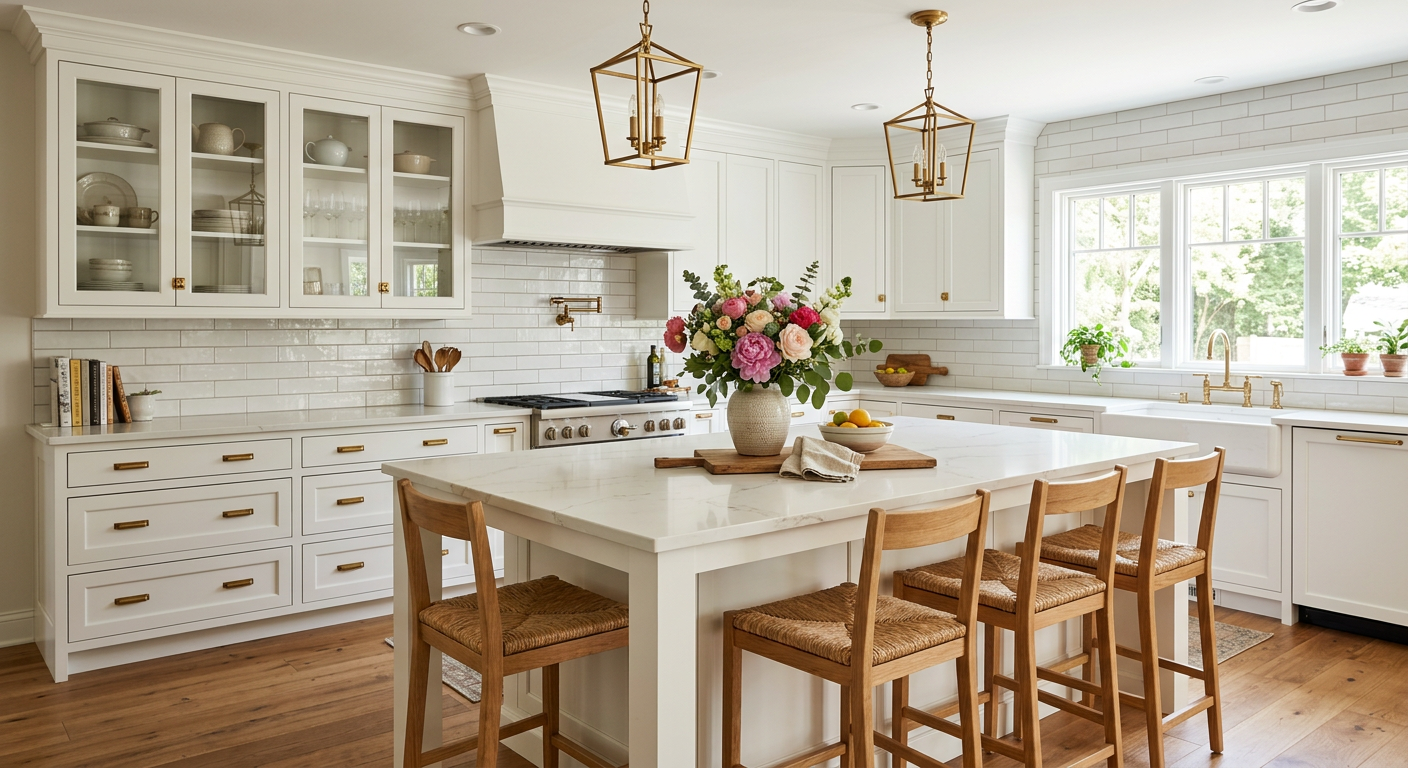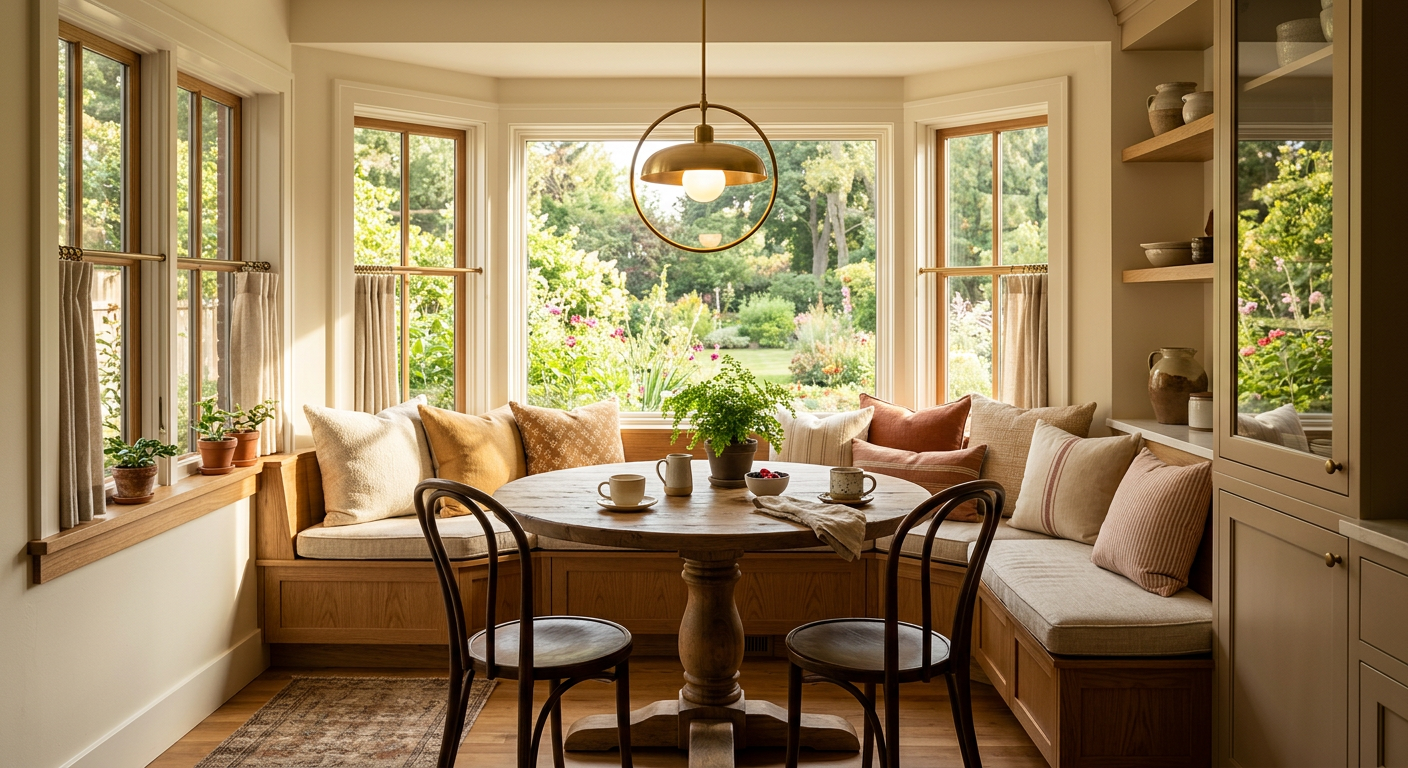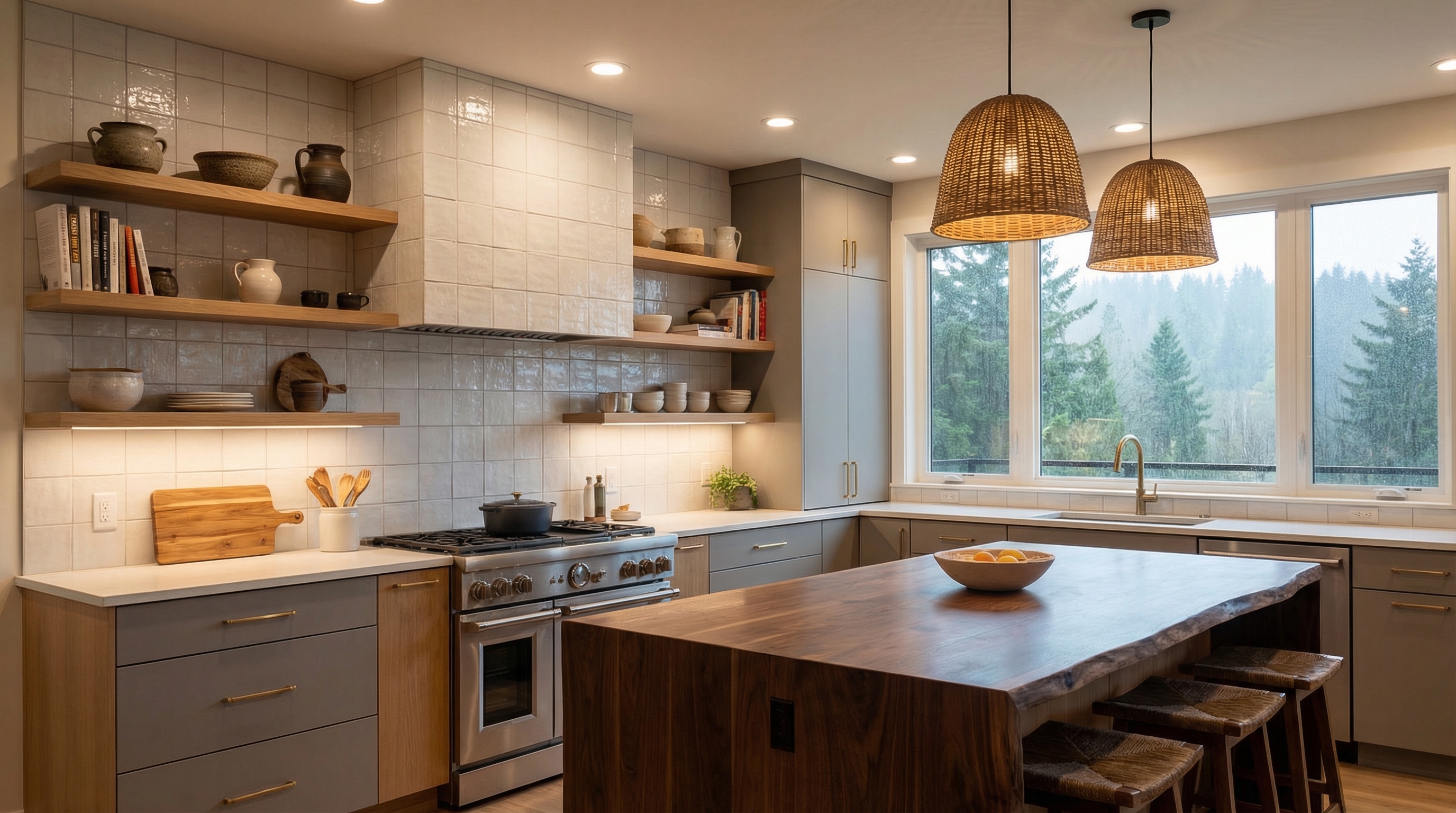
A galley kitchen remodel cost in Pierce County ranges from $10,000 for a partial update to $92,000 or more for a full gut-and-rebuild with structural wall removal. The average mid-range galley remodel I build in Puyallup right now lands between $30,000 and $52,000. That gets you new semi-custom cabinets on both walls, quartz countertops, a tile backsplash, new appliances, LVP flooring, and updated lighting.
I’m a third-generation carpenter with 20+ years in the trades. I started Pacific Remodeling here in Puyallup in 2018, and I’ve remodeled more galley kitchens than any other layout. They are everywhere in Pierce County.
Galley Kitchen Remodel Cost by Scope

Here are the real numbers I’m quoting right now. PNW labor runs 10-15% above national averages, so if you’re comparing to numbers from a national website, adjust upward.
| Project Scope | What’s Included | Pierce County Cost |
|---|---|---|
| Cosmetic refresh | Paint cabinets, new hardware, new faucet, new lighting | $3,500 - $7,500 |
| Partial update | Reface or replace cabinet doors, new countertops, new sink, backsplash | $10,000 - $22,000 |
| Mid-range full remodel | New semi-custom cabinets, quartz counters, tile backsplash, new appliances, LVP flooring | $30,000 - $52,000 |
| High-end full remodel | Custom cabinetry, stone counters, premium appliances, structural changes, new electrical and plumbing | $58,000 - $92,000 |
| Galley-to-open-concept conversion | Remove load-bearing wall, LVL beam, full kitchen rebuild | $42,000 - $88,000 |
That middle tier is where most of my clients land. They want a kitchen that functions better, looks modern, and actually feels like a room they enjoy spending time in. Not a dark tunnel with oak cabinets from 1987.
Why Galley Kitchens Cost What They Do
Galley kitchens are priced differently than other layouts. A few things drive this:
- Two full walls of cabinets and countertops. A 12-foot galley has 24 linear feet of base cabinets and 24 linear feet of uppers. That’s more cabinetry per square foot than any other layout.
- Tight corridors increase labor costs. My installers charge 10-20% more for galley kitchens. Limited swing room, difficult appliance maneuvering, and precise alignment between two parallel walls all add time.
- No island option in narrow galleys. Islands add value and market appeal. You can’t fit one in a 7-foot-wide corridor, which is why galley-to-open-concept conversions are the most requested kitchen remodel in Pierce County.
- PNW cost factors. Licensed contractors in Washington carry L&I insurance, adding 10-12% to overhead. Countertop fabricators cluster in the Kent-Auburn-Tacoma corridor. Pierce County permit fees range $400 to $1,100 depending on scope.
For a full breakdown of general kitchen remodel pricing, check my kitchen remodel cost guide for Puyallup.
Where Every Dollar Goes: Component Breakdown
Here’s what fills up the budget on a mid-range galley remodel (12-foot, both walls, semi-custom cabinets, quartz, new appliances).
| Component | Cost Range | Notes |
|---|---|---|
| Semi-custom cabinets (24 LF installed, both walls) | $8,000 - $14,000 | KraftMaid, Medallion, or Bellmont (local to Sumner) |
| Quartz countertops (~28 sq ft) | $2,200 - $4,200 | Caesarstone, Cambria, or MSI Q Premium |
| Tile backsplash (full height, both walls) | $1,500 - $3,000 | Subway, large-format, or patterned ceramic |
| Appliances (range, dishwasher, OTR microwave, counter-depth fridge) | $5,000 - $9,000 | Bosch, GE Profile, or Samsung |
| LVP flooring (12’x9’) | $1,200 - $2,200 | COREtec or LifeProof |
| Undermount sink + faucet | $400 - $700 | Kraus, Moen Arbor, or Delta Essa |
| Recessed lighting + under-cabinet LEDs | $800 - $1,600 | 4-6 cans plus LED tape on both walls |
| Demo and installation labor | $4,000 - $8,000 | Full gut, haul-off, and install |
| Permits (building + electrical + plumbing) | $400 - $750 | Pierce County Planning & Public Works |
| Contingency (15-20%) | $3,500 - $8,500 | For what’s hiding behind the walls |
If your home went up before 1980, add $150-$400 for asbestos testing before demo. Drywall joint compound in Pierce County homes from that era frequently contains asbestos. If the test comes back positive, abatement runs $3,000 to $15,000 depending on how much material is affected.
The Labor-to-Materials Split
On a mid-range galley remodel, the split runs about 55% materials and 45% labor. If you add structural work like wall removal, that flips closer to 50/50 because structural modifications are labor-heavy. I tell homeowners: if a bid comes in dramatically lower than others, the contractor is cutting labor somewhere. And labor is where quality lives.
Cabinetry: The Biggest Line Item in a Galley Remodel
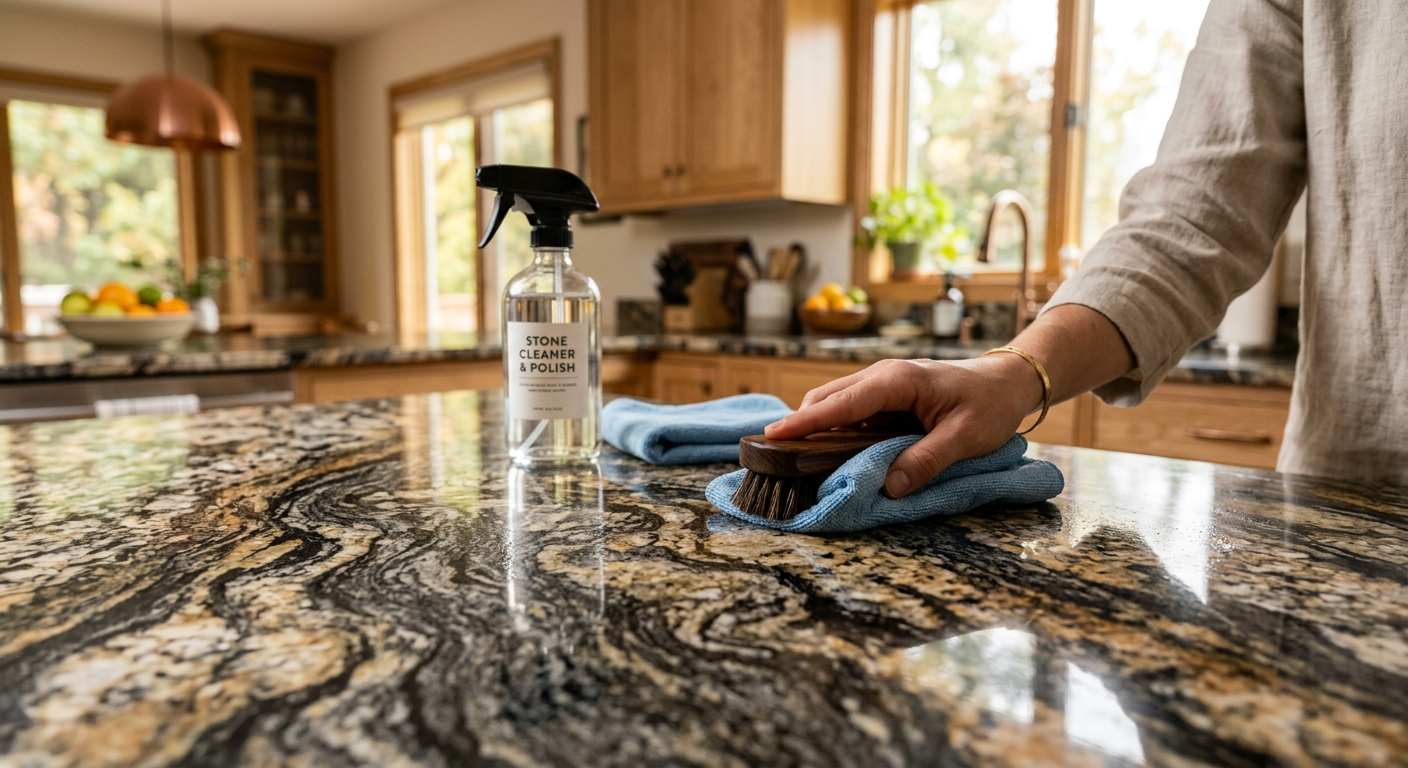
Cabinets eat 30-40% of your galley kitchen remodel cost. Two full walls of cabinetry is a lot of material. Here’s what each tier costs per linear foot, installed, in Pierce County:
| Cabinet Type | Base Cabinets/LF | Upper Cabinets/LF | Both Walls Combined/LF |
|---|---|---|---|
| Stock (Home Depot, Lowe’s, IKEA) | $80 - $150 | $50 - $100 | $130 - $250 |
| Semi-custom (KraftMaid, Medallion, Bellmont) | $150 - $350 | $100 - $200 | $250 - $550 |
| Custom (Bellmont 1900, Dura Supreme, local shops) | $300 - $700 | $200 - $400 | $500 - $1,100 |
Bellmont Cabinet Co. is headquartered in Sumner, WA, right here in Pierce County. I use their Lumina and 1900 series regularly. Being local cuts lead times by 2-3 weeks compared to shipping from out of state. For a deeper comparison of reface vs. replace, check my post on kitchen cabinet refacing vs. replacing.
Which Door Styles Work in a Galley
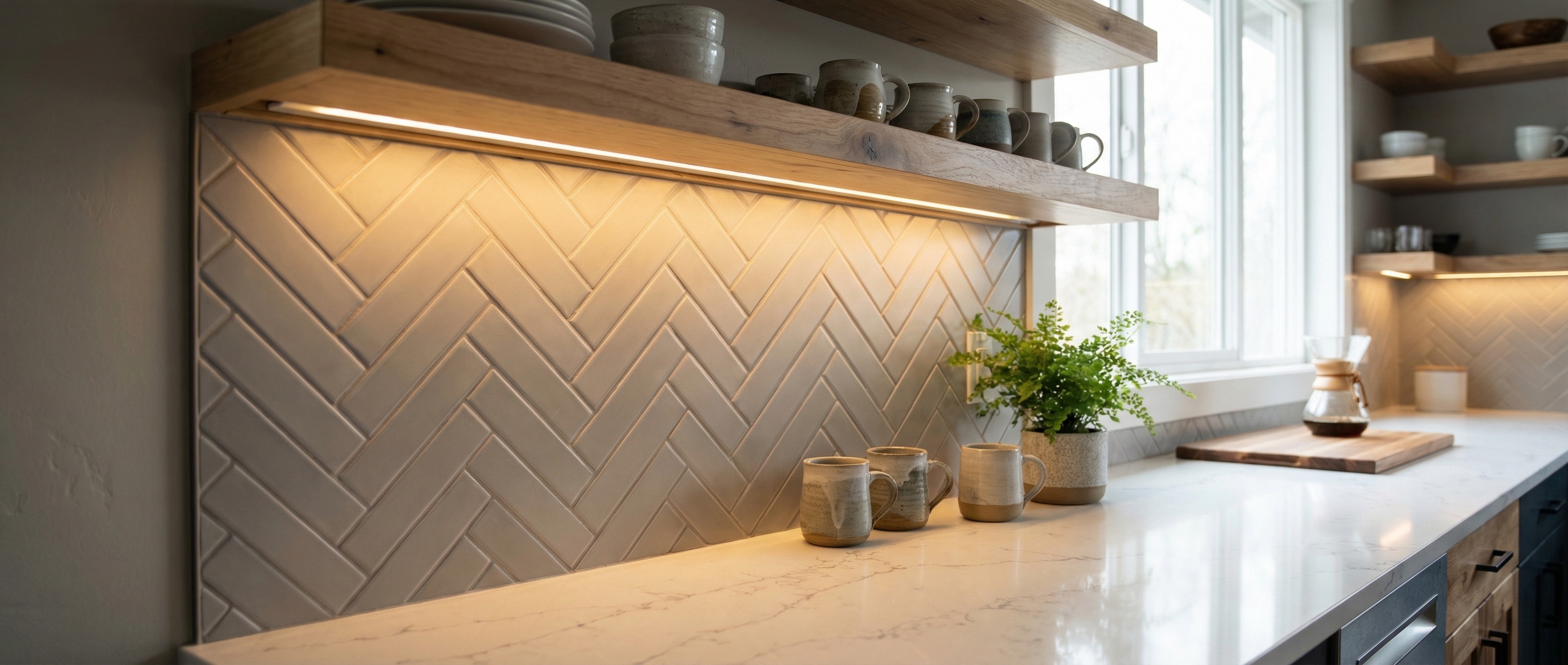
Door style matters more in a galley than any other kitchen layout. The wrong choice makes the space feel like a narrow hallway.
- Flat-panel or slab doors open up the space visually. Modern, clean, and they don’t collect grease in raised-panel grooves.
- Shaker doors work in most PNW homes. Classic, clean lines, and they pair well with every countertop material.
- Glass-front uppers expand perceived depth. This is one of the best tricks for galleys. Even two or three glass doors mixed in with solid doors makes a noticeable difference.
- Open shelving on one wall is the most space-expanding option. Saves $800-$2,000 compared to upper cabinets on that wall.
Avoid in galleys: Raised-panel doors in dark finishes. They close the space visually and make a narrow kitchen feel even tighter.
Countertop Options: Cost Per Square Foot for Galley Kitchens
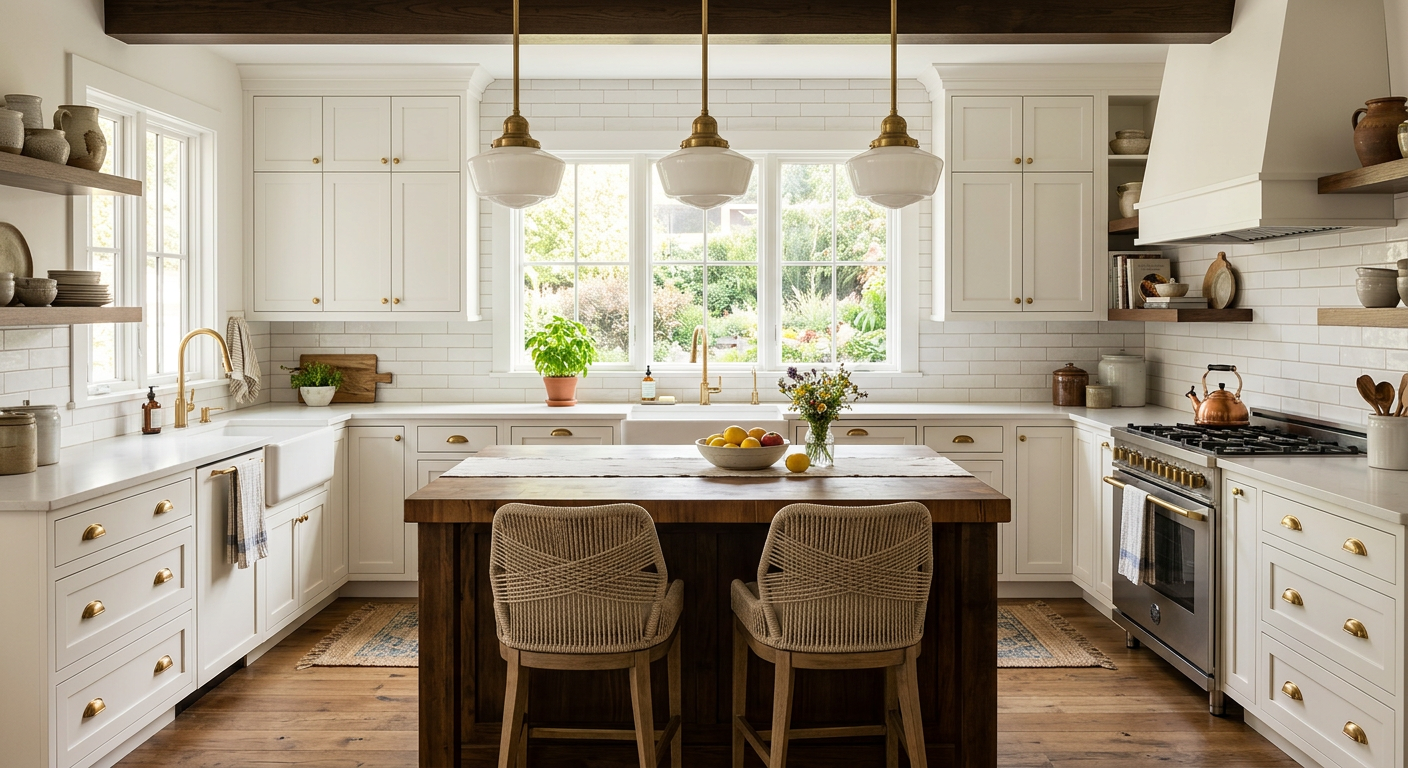
Most galley kitchens in Pierce County homes have 24 to 30 square feet of countertop across both walls. Here’s what each material runs, with my honest take on which works best.
| Material | Installed Cost/sq ft | Total for a 12’ Galley | My Take |
|---|---|---|---|
| Laminate | $15 - $40 | $500 - $1,200 | Fine for rentals and flips. Formica 180fx looks better than laminate used to. |
| Butcher block | $40 - $80 | $1,200 - $2,400 | Looks great, but PNW humidity causes wood movement. Oil it every 4-6 weeks the first year. |
| Quartz | $60 - $120 | $1,800 - $3,600 | My top recommendation. Zero maintenance, stain-proof, handles PNW moisture perfectly. |
| Granite | $50 - $100 | $1,500 - $3,000 | Classic, durable, but needs annual resealing. |
| Marble | $75 - $150 | $2,300 - $4,500 | Beautiful but etches from lemon juice and vinegar. Not practical for a working galley. |
For a full comparison of countertop materials, read my guide on choosing kitchen countertops or quartz vs. granite countertops.
Quartz dominates my galley kitchen projects for good reason. In a tight kitchen where both counters get heavy daily use, you want a surface that handles moisture, stains, heat, and impact without needing maintenance. Caesarstone, Cambria, and Silestone all make excellent options in the $60-$95 per square foot range.
A Real Project: 1963 Rambler in Sumner
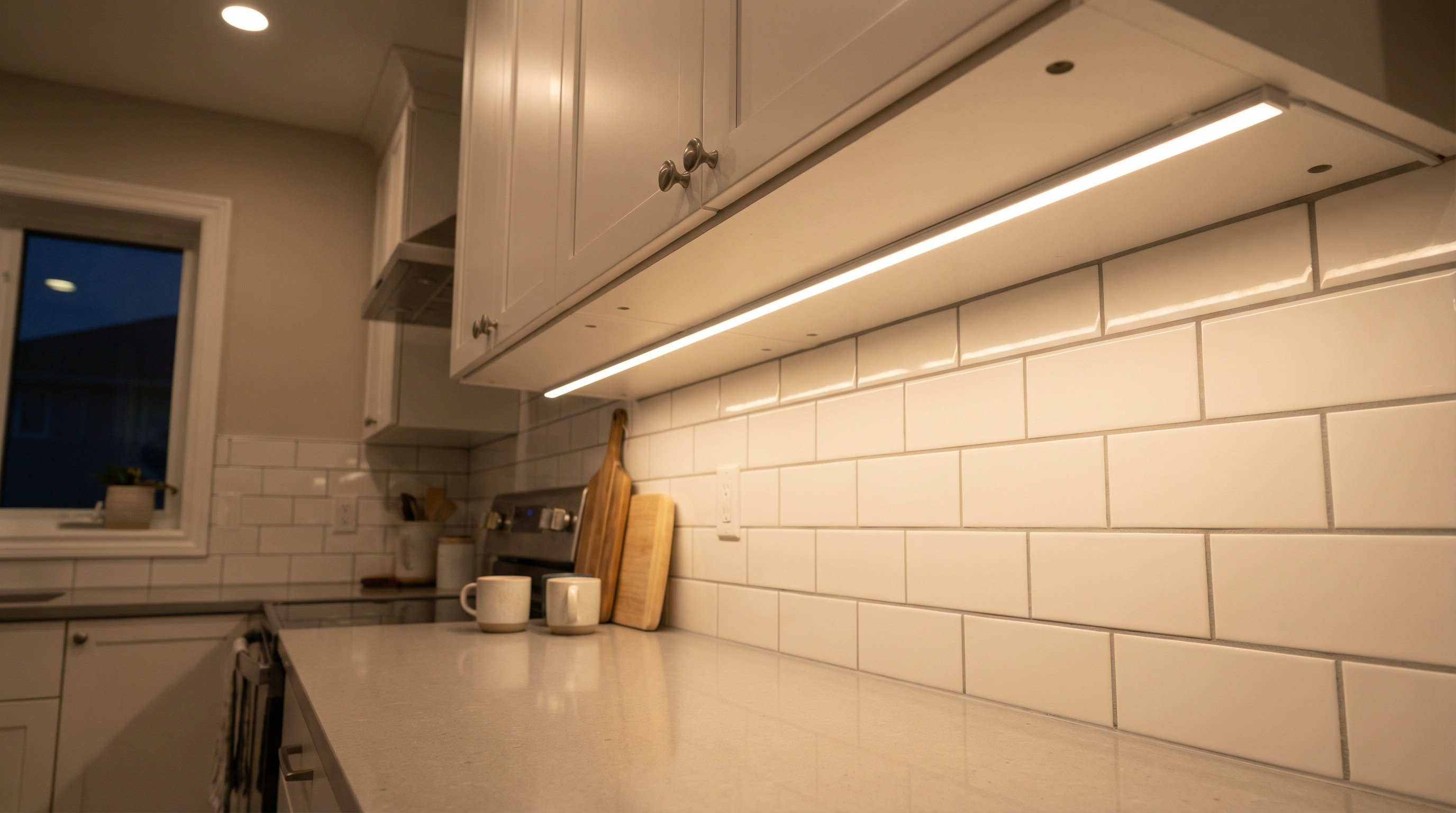
Last fall I remodeled a galley kitchen in a 1,350-square-foot rambler in Sumner. The homeowners had lived with the original kitchen for 8 years and couldn’t take it anymore. Dark oak cabinets, laminate counters, a single fluorescent light fixture in the ceiling, and linoleum flooring with seams coming apart.
The scope:
- Gut both walls of the existing 11-foot galley
- Install semi-custom Bellmont Lumina cabinets in a warm white shaker, both walls
- Caesarstone quartz countertops in Statuario Nuvo
- 3x12 white subway tile backsplash, full height to the uppers
- COREtec Pro Plus LVP flooring running lengthwise through the galley and into the dining room
- Counter-depth Samsung French door refrigerator (the old standard-depth fridge stuck out 6 inches into the corridor)
- Bosch 800 Series 30” gas range
- Bosch 300 Series dishwasher
- 6 recessed LED can lights plus under-cabinet LED tape on both walls
- New Moen Arbor pull-down faucet and Kraus undermount sink
- 2 new 20-amp circuits for the dishwasher and microwave
- Duct replacement: swapped the old 3.25”x10” rectangular flex duct for proper 6” round smooth duct to the range hood
The cost: $41,200 total.
The timeline: 7 weeks from demo day to final walkthrough. Cabinets took 4 weeks to arrive after ordering. Material lead time is always the pacing item on these projects. Read my full guide on kitchen remodel timelines for a week-by-week breakdown.
What surprised the homeowners: The counter-depth refrigerator. They didn’t realize their old fridge was stealing 6 inches from an already narrow corridor. Swapping to counter-depth gave them nearly a foot more passing space. That single change made the biggest difference in how the kitchen felt day to day.
Galley-to-Open-Concept: Is It Worth the Extra Cost?
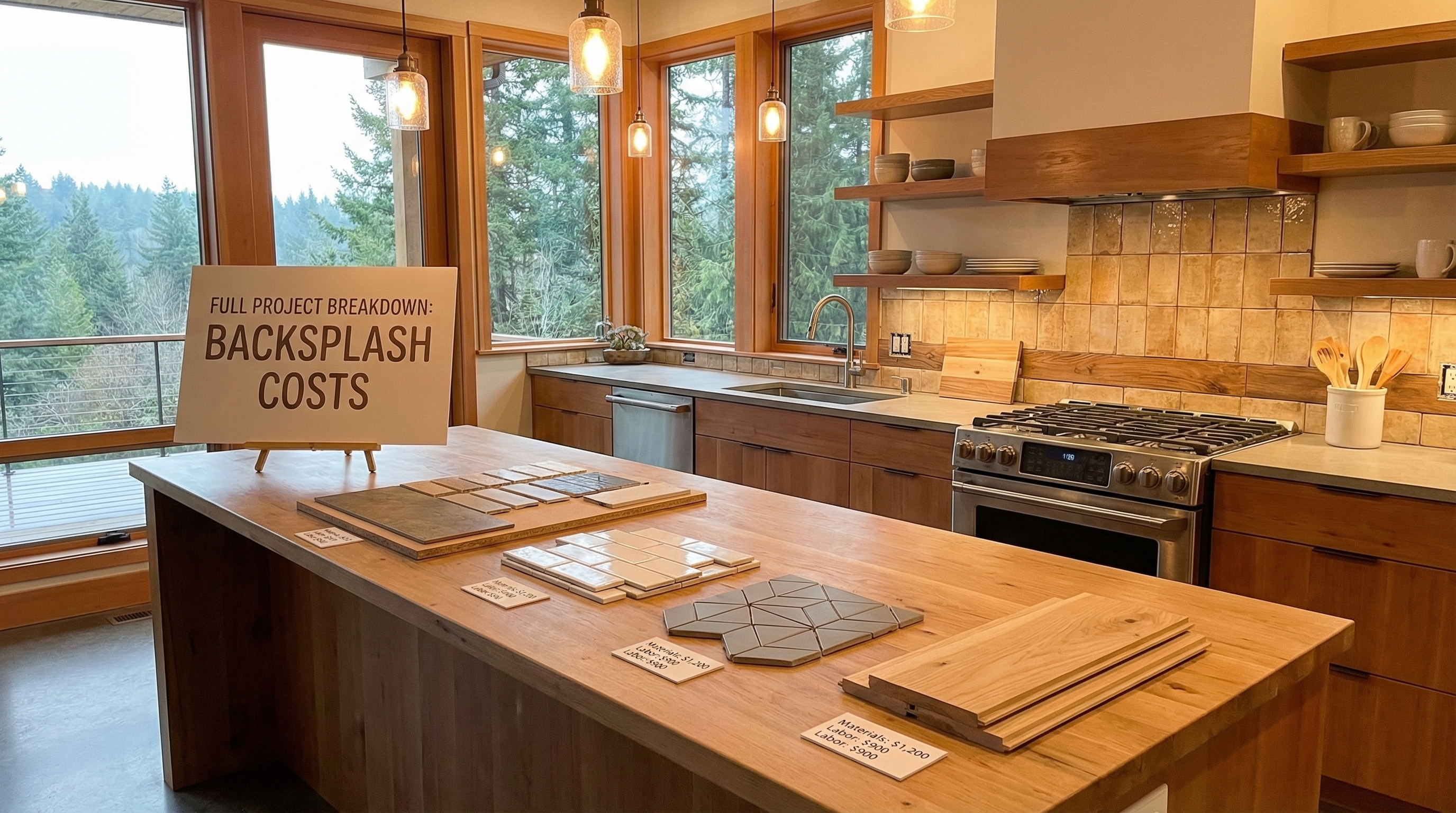
This is the question I hear more than any other on galley kitchen consults. Should I keep the galley layout or blow out a wall?
Here’s the honest answer: it depends on your budget and your priorities.
| Layout Option | Best For | Conversion Cost |
|---|---|---|
| Keep the galley | Tight budgets, maximizing storage, small households | $0 conversion cost (just remodel in place) |
| Add a peninsula at one end | Adding seating, opening the visual feel without structural risk | $3,500 - $9,000 |
| Galley to L-shape | Opening one end to dining room, adding a peninsula or short run | $6,000 - $18,000 |
| Galley to open concept | Families, entertainers, maximum resale value | $12,000 - $30,000 on top of the remodel |
Here’s something most people don’t know: the galley is actually the most efficient cooking layout. Professional restaurant kitchens almost all use galley configurations. Everything is within one or two steps. No wasted walking. The “problem” with a galley isn’t efficiency. It’s that the cook faces the wall instead of the room. You’re isolated from your family while you’re making dinner.
If the wall between your galley and living room is load-bearing (and in Pierce County ramblers from the 1950s-1970s, it is roughly 65% of the time), removing it requires a structural engineer assessment ($350-$600) and an LVL beam installation ($5,500-$12,000 for a typical 12-foot span). I cover this in full detail in my post on open concept kitchen remodel costs.
Before you commit to a full open-concept conversion, consider adding a peninsula at the open end of your galley instead. A peninsula with seating costs $4,500-$9,000, adds counter space and a breakfast bar, and involves zero structural risk. For a lot of my clients, this is the smarter move.
Lighting: The Highest-ROI Upgrade in a Galley Kitchen
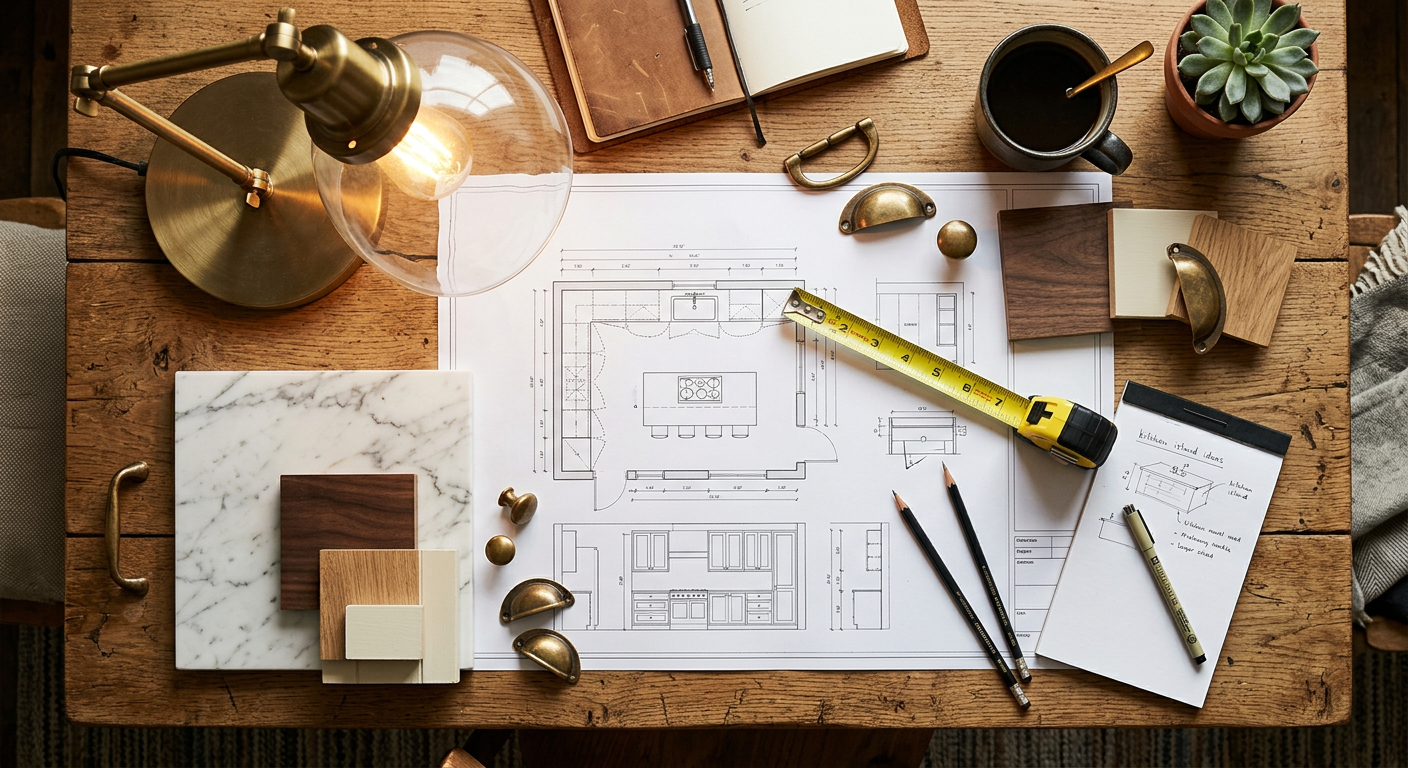
I put lighting in its own section because it’s the single most underfunded part of galley kitchen remodels, and it shouldn’t be. A galley kitchen has natural shadow problems. Two walls of upper cabinets block overhead light from reaching the counters. One window, maybe two. The result is a dark, narrow space that no amount of white paint fixes on its own.
Here’s what proper galley kitchen lighting costs:
| Lighting Type | Installed Cost | Impact |
|---|---|---|
| Under-cabinet LED tape (both walls) | $300 - $700 | Eliminates counter shadow. The single most important lighting upgrade in a galley. |
| Recessed can lights (4-6 in a 12’ galley) | $600 - $1,800 | Replaces the single dim ceiling fixture most old galleys have |
| LED tape inside glass-front cabinets | $100 - $250 | Creates a depth illusion, makes the galley feel wider |
| Toe-kick lighting | $150 - $350 | Visually widens the floor, dramatic effect at night |
I install under-cabinet LEDs on every galley remodel. No exceptions. The difference is dramatic. Your counters go from shadowed and dim to evenly lit work surfaces. The whole kitchen feels brighter and bigger. For a full breakdown of fixture options and wiring costs, see my post on kitchen lighting upgrade costs.
A few more tricks I use for kitchen backsplash choices in galleys: large-format subway tile (3x12 or 4x12) in white or light gray, installed full height from countertop to upper cabinets. The continuous reflective surface bounces light across the corridor and makes the space feel wider. Small mosaic tiles do the opposite. Too many grout lines break up the surface visually and absorb light.
Appliances Sized for Galley Kitchens
Standard-size appliances can choke a galley. Here’s what I recommend for corridor kitchens:
- Counter-depth refrigerator. This is not optional in a galley. A standard-depth fridge (30-32 inches deep) in a 7-foot corridor leaves only 40-42 inches of passing space. Counter-depth (24-27 inches) maintains usable clearance. Samsung, LG, and KitchenAid all make solid counter-depth French door models in the $2,200-$3,400 range.
- 18-inch slim dishwasher. If corridor width is tight, a Bosch 18-inch slim dishwasher ($1,200-$1,600) saves 6 inches vs. a standard 24-inch unit. Most of my clients stick with 24-inch, but the slim option exists for the narrowest galleys.
- Over-the-range microwave. Frees up counter space entirely. In a galley where every inch of counter is working surface, losing counter space to a microwave is a bad trade. GE and Sharp make reliable OTR models for $250-$600.
- Ducted range hood or OTR with exterior vent. In the PNW, recirculating hoods are not good enough. Our humidity levels mean grease buildup on new cabinetry within two years with a ductless hood. Run smooth-wall 6-inch duct to the exterior. Always.
The Pierce County Galley Kitchen: What’s Behind Your Walls
Most galley kitchens I remodel in Puyallup, South Hill, Lakewood, and Spanaway are in homes built between 1945 and 1975. These homes share a lot of common traits that directly affect your remodel cost.
Crawl Space Access
Most Pierce County ramblers have crawl spaces, not slab foundations. Good news: this makes plumbing and electrical modifications cheaper ($500-$1,500 to run new lines through a crawl space vs. $1,500-$4,000 to core-drill concrete on a slab). Bad news: Puyallup’s clay-heavy soil causes crawl spaces to retain moisture. Before any galley remodel that opens the subfloor:
- Inspect the vapor barrier and replace if degraded ($500-$1,500)
- Check for moisture damage to subfloor sheathing ($0 if intact, $800-$3,000 to replace)
- Verify no mold in the crawl space before closing everything back up
- Confirm floor joist condition and sistering needs
I’ve opened up crawl spaces in valley-floor Puyallup homes and found standing water, rotted rim joists, and compromised vapor barriers. Better to know before you install $14,000 in cabinets on top of it.
Electrical Panels and Wiring
Homes from the 1950s-1970s often have 100-amp or even 60-amp panels. A modern kitchen pulls a lot of power: dishwasher, microwave, range hood, garbage disposal, refrigerator, and LED lighting all need dedicated or shared circuits. If the panel is maxed out, a panel upgrade runs $2,000-$4,000. Budget for it.
I’ve worked on older Puyallup homes with knob-and-tube wiring still in the kitchen walls. If your home pre-dates 1945, add $2,000-$5,000 to the budget for electrical remediation. This isn’t optional. It’s a code and safety issue.
Cast Iron Drain Lines
Pre-1970s Pierce County homes often have cast iron drain lines under the kitchen. If you’re moving the sink location or adding a dishwasher drain in a new spot, the plumber may need to cut into or replace a section of cast iron. Budget $800-$2,000 for this if your home is older than 1970.
9 Mistakes That Blow Up Galley Kitchen Budgets
I’ve seen every one of these on real projects. Some of them I learned the hard way early in my career.
-
Putting the refrigerator mid-run instead of at the end. The fridge door blocks the entire corridor when open. Always place the fridge at one end of the galley, adjacent to the entrance.
-
Skipping counter-depth on the fridge. A standard-depth fridge in a narrow galley makes the corridor feel like a squeeze. This is the most common regret I hear from homeowners who didn’t upgrade.
-
Running flooring perpendicular to the long axis. Always run LVP planks, hardwood, or rectangular tile parallel to the long wall of the galley. Perpendicular installation chops the space visually and makes it feel shorter and narrower.
-
Installing 42-inch upper cabinets without checking ceiling height. Many Pierce County ramblers have 8-foot ceilings. A 36-inch base cabinet + 18-inch gap + 42-inch upper = 96 inches exactly. That hits the ceiling with zero room for crown molding. Measure first. 36-inch uppers are often the right call.
-
Choosing dark cabinet finishes. Dark cabinets on both walls of a galley make it feel like a cave. Light colors (white, warm gray, greige) reflect light and visually expand the space.
-
Forgetting ventilation upgrades. If you’re upgrading the range, upgrade the ductwork too. Old 3.25”x10” rectangular flex duct is a grease trap and fire hazard. Replace it with smooth-wall 6-inch round duct. Budget $400-$900.
-
No visual break in a long run. A galley with 14+ feet of identical cabinet doors looks institutional. Break it up with a section of open shelving, glass-front doors, or a different countertop material on one wall.
-
Underestimating flooring extension. If you remove a peninsula or wall, the floor underneath is bare subfloor. Matching existing flooring or extending new flooring into the adjacent room adds $800-$2,500 that homeowners rarely budget for.
-
Not planning for the dead wall. If your galley has a closed end, that blind wall is prime real estate. A built-in pantry cabinet, appliance garage, or open shelving vignette adds $500-$3,000 in functionality. Don’t waste it.
For more on avoiding common remodeling pitfalls, read my post on how to avoid common remodeling mistakes.
How Long Does a Galley Kitchen Remodel Take?
Here’s a realistic timeline for a mid-range galley remodel in Pierce County:
| Phase | Duration |
|---|---|
| Design, material selection, and ordering | 2-4 weeks |
| Permit application and approval | 1-3 weeks |
| Cabinet lead time (after order) | 3-6 weeks (semi-custom) |
| Demo and gut | 2-3 days |
| Rough electrical and plumbing | 2-4 days |
| Inspection | 1-3 days (scheduling dependent) |
| Cabinet installation | 2-3 days |
| Countertop template | 1 day |
| Countertop fabrication | 7-14 days |
| Countertop installation | 1 day |
| Backsplash tile | 2-3 days |
| Flooring | 1-2 days |
| Finish electrical, plumbing, and trim | 2-3 days |
| Final inspection and cleanup | 1-2 days |
Total: 6-12 weeks from permit to completion. Material lead times drive the schedule more than anything else. Custom cabinets can push the timeline to 14+ weeks.
A scheduling tip: Contractors in Pierce County are busiest April through September. Starting your galley remodel between November and February can shave 2-4 weeks off the wait time to get on the schedule, and some contractors (myself included) offer off-season pricing.
One thing I tell every client: you will live without a kitchen for 3-5 weeks during the build. Set up a temporary kitchen station somewhere. Microwave, coffee maker, paper plates, and a cooler. Plan for it and it’s manageable. Don’t plan for it and it’s miserable.
Galley Kitchen Remodel Checklist: Before You Call a Contractor
Use this to get organized before your first consultation. Showing up prepared saves time and helps you get a more accurate estimate.
- Measure your galley: length, width, and ceiling height
- Determine your real budget (not your hope budget) and add 15-20% for surprises
- Decide: keep the galley layout, add a peninsula, or go open concept?
- Pick a general cabinet style and color direction (bring photos or Pinterest boards)
- Choose a countertop material preference
- List your must-have appliances and sizes
- Note what you hate most about the current kitchen (this tells the contractor your priorities)
- Check your home’s age and whether you’ve ever had an electrical panel upgrade
- Verify your contractor’s WA L&I registration at lni.wa.gov
Know your budget before you call anyone. Not what you hope the project costs. What you can actually spend. I’d rather have an honest conversation about scope on day one than deliver a design you can’t afford on day thirty.
Common Questions About Galley Kitchen Remodel Costs
Can I remodel a galley kitchen for under $20,000?
Yes, but you’re looking at a partial update, not a full remodel. For $10,000-$20,000 in Pierce County, you can reface or replace cabinet doors, install new countertops (quartz on both walls), add a new sink and faucet, and install a tile backsplash. You’ll keep the existing cabinet boxes, flooring, and appliances. This is a solid play if your cabinet boxes are plywood and structurally sound. If the boxes are particleboard from the 1980s, they’re not worth saving. You’ll want to consider whether a kitchen remodel is worth the investment at full scope instead.
Does a galley kitchen remodel increase my home’s value?
A mid-range galley kitchen remodel typically recovers 65-80% of its cost at resale. In the Puyallup and South Hill market, where the median home price sits around $525,000-$560,000, an updated kitchen is a top-3 buyer priority. Homes with updated kitchens sell 8-14 days faster on average. The best ROI materials for Pierce County: quartz countertops, shaker-style semi-custom cabinets in white or gray, and stainless undermount sinks. These are the expected standard for homes in the $450,000-$650,000 range right now.
Should I open up my galley kitchen or keep the two-wall layout?
If your budget allows for it and you want the social connection between the kitchen and living space, opening the wall is the single most impactful change you can make. But it’s also the most expensive single item on the list. If the wall is load-bearing (and it usually is in Pierce County postwar homes), expect $5,500-$12,000 just for the structural beam work. If you can’t swing that, adding a peninsula at the open end of the galley for $3,500-$9,000 gives you seating and visual openness without structural risk. I walk through both options in detail in my open concept kitchen remodel cost guide.
How do I make my galley kitchen feel bigger without removing walls?
Five changes that make the biggest difference, ranked by impact:
- Light-colored cabinets (white, warm gray, or greige)
- Under-cabinet LED lighting on both walls
- Replace upper cabinets on one wall with open shelving
- Counter-depth refrigerator (frees up 4-6 inches of corridor width)
- Large-format backsplash tile installed full height to the upper cabinets
These five changes together cost roughly $2,000-$6,000 above what you’d spend on darker alternatives. The visual payoff is huge.
Do I need a permit for a galley kitchen remodel in Pierce County?
If you’re adding new electrical circuits, moving plumbing, or making structural changes, yes. Pierce County Planning & Public Works handles residential remodel permits. Building permit base fee: $250-$600 plus plan review. Electrical permit: $85-$150. Plumbing permit: $85-$150. Skipping permits creates problems at resale when the home inspector flags unpermitted work. I cover the full permit process in my remodeling permits guide for Puyallup.
Also Serving Homeowners Across Pierce County
I’ve remodeled galley kitchens for homeowners throughout the area, including Tacoma, Bonney Lake, Edgewood, Sumner, South Hill, and Lakewood. The housing stock across these communities shares a lot in common: postwar ramblers, split-levels, and ranches with narrow galley kitchens that need updating.
Ready to Talk About Your Galley Kitchen?
If you’re thinking about a galley kitchen remodel and want straight answers about cost and scope, I’d like to walk through your kitchen and talk about what makes sense for your home and your budget. Every galley is different. Some need a full gut. Some need smart updates that stretch the budget further. The best way to find out is a free in-home estimate where I can see the space, check for potential surprises, and give you real numbers.
I treat every home the way I’d want my mom’s house treated. If this was her kitchen, how would I want the experience and the outcome to be? That’s my standard. Every project. Every time.
Contact us to schedule your free estimate, or call me at (253) 392-9266.
Brad Zemke, Owner Pacific Remodeling LLC Puyallup, WA