About 7 out of 10 bathroom remodels I do these days involve removing a bathtub and putting in a walk-in shower. It’s the most requested project my crew handles. More than 55% of homeowners nationally now prioritize a larger shower over keeping a bathtub, and from what I see locally in Puyallup, that number feels low.
I want to give you straight talk on what walk-in showers actually cost, what design choices are popular right now, and where your money goes. No fluff. Real numbers from real projects.
What Does a Walk-In Shower Cost in 2026?
Let’s start with the numbers everyone wants to know. Nationally, walk-in shower installations range from $6,000 to $20,000, with the average landing around $8,000 to $12,000. But here in the Pacific Northwest, labor rates run about 10-15% higher than the national average, so budget accordingly.
Here’s how I break it down based on what I’m building in Puyallup right now:
| Project Level | What You Get | Cost Range |
|---|---|---|
| Basic walk-in shower | Standard porcelain tile, semi-frameless glass door, single showerhead, built-in niche | $10,000 - $18,000 |
| Mid-range with custom tile | Large-format porcelain, glass mosaic accents, frameless enclosure, rain head, linear drain, 2 niches | $16,000 - $29,000 |
| High-end spa-style | Full custom tile, curbless entry, body jets, rain head, heated floor, backlit niche, frameless glass panels | $23,000 - $40,000+ |
These prices include demo, plumbing, waterproofing, tile, glass, fixtures, and labor. They don’t include permits or any structural surprises behind the walls.
Tub-to-Shower Conversion: The Most Popular Project I Do
A tub-to-shower conversion typically costs between $10,000 and $18,000 for a quality custom-tile shower in the Puyallup area. That range covers removing the old tub, updating plumbing, proper waterproofing, tile work, a glass enclosure, and new fixtures.
Why so popular? Simple math. Most homeowners have a tub in their primary bathroom that nobody uses. Maybe they used it twice in five years. That tub takes up 15 square feet that could become a walk-in shower they’d use every single day.
I always tell homeowners: keep one tub in the house for resale value (usually the hall bath). Convert your primary bathroom tub into the shower you actually want.
Where Your Money Goes: Component Cost Breakdown
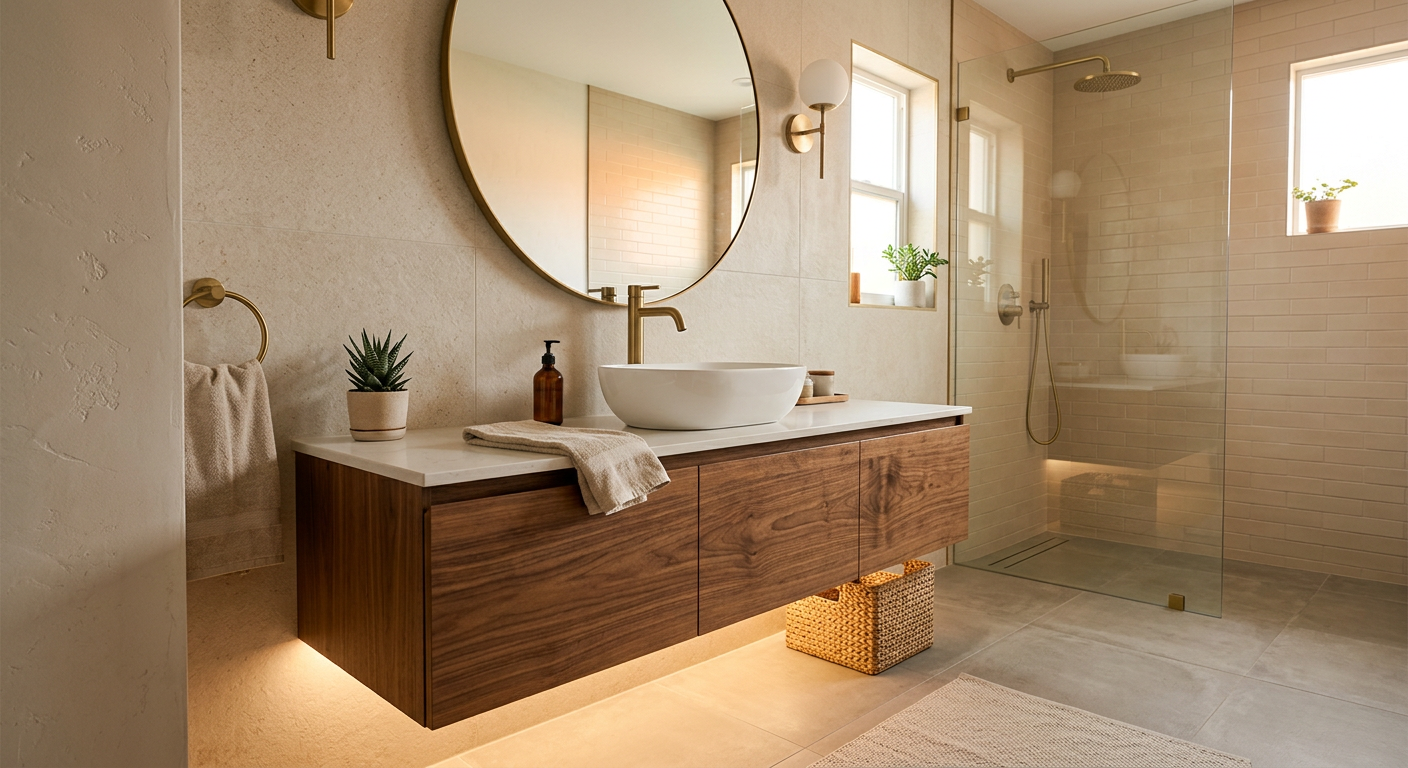
Here’s what each piece of a walk-in shower costs so you know where your dollars are going:
| Component | Cost Range |
|---|---|
| Tile (material + installation) | $8 - $22/sq ft for porcelain, $35 - $60/sq ft for glass mosaic |
| Frameless glass enclosure | $1,600 - $4,000 |
| Waterproofing system | $1,600 - $3,200 |
| Linear drain | $300 - $800 |
| Rain showerhead | $150 - $600 |
| Body jets (set of 4-6) | $400 - $1,200 |
| Built-in niche | $200 - $500 each |
| Heated shower floor | $500 - $1,200 (electric radiant) |
| Plumbing rough-in | $800 - $2,500 |
| Labor (tile setting) | $10 - $25/sq ft |
A typical walk-in shower has 80-120 square feet of tile surface area (walls and floor combined), so tile is usually 30-40% of the total project cost.
Walk-In Shower Design Ideas for 2026
Here’s what I’m installing the most right now and what clients are asking for.
Large-Format Porcelain Tile
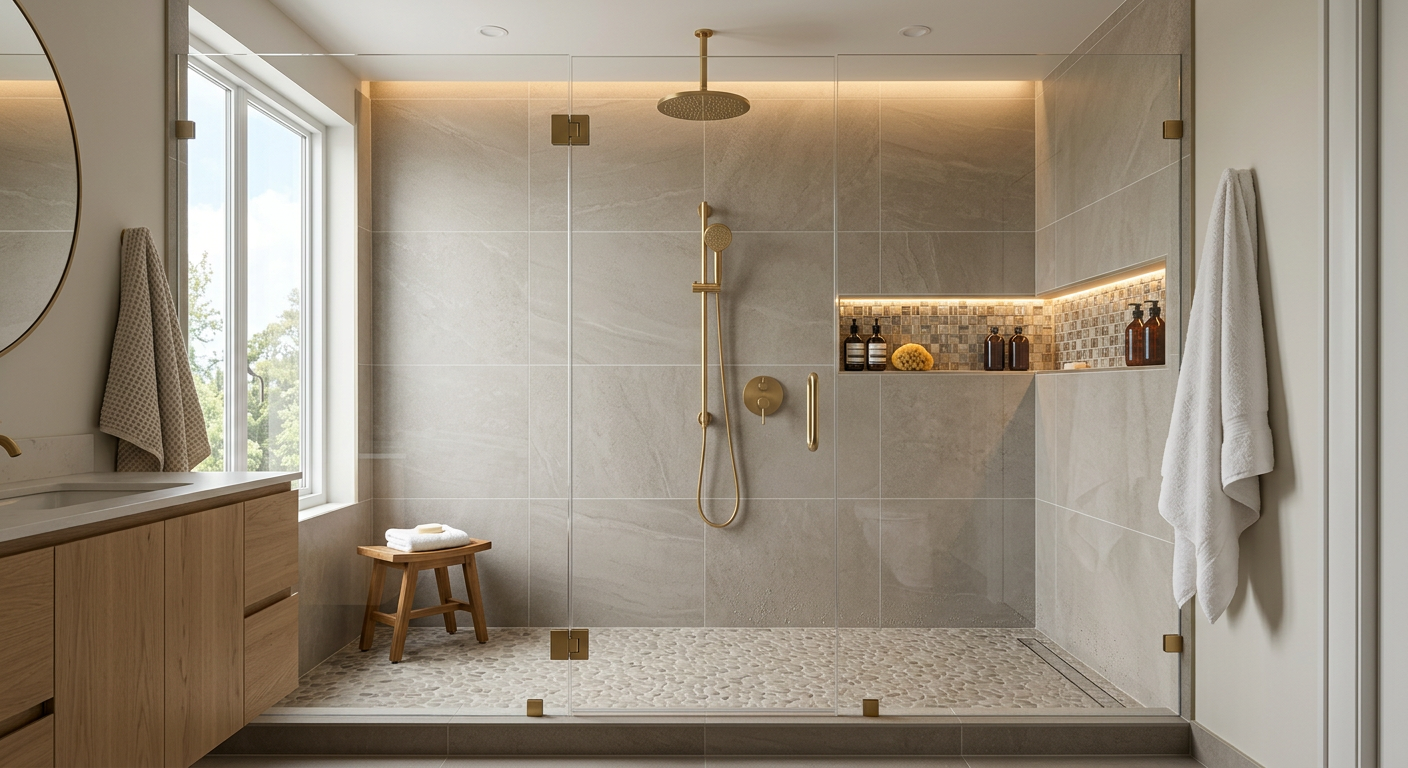
This is the biggest shift I’ve seen in shower design over the past two years. Homeowners are choosing 24”x48” or even 48”x48” porcelain slabs over small subway tiles. Fewer grout lines means a cleaner look and less maintenance. These tiles come in marble-look, concrete-look, and natural stone patterns that are hard to tell from the real thing.
Cost: $12 to $22 per square foot installed, depending on the pattern and manufacturer.
Matte Black and Brushed Nickel Fixtures
Chrome is fading. I’m installing matte black fixtures on about 60% of my shower projects, with brushed nickel making up most of the rest. Matte black gives a modern, high-contrast look against lighter tile. Brushed nickel feels softer but still reads contemporary. Both hide water spots better than polished chrome, which matters in our hard-water areas.
Built-In Niches with Backlighting
A recessed niche for shampoo and soap is standard in every walk-in shower I build. The 2026 upgrade? LED strip lighting behind it. That turns a functional storage spot into a design feature and gives you soft ambient light for early morning showers. A backlit niche adds about $300 to $600 to the project.
Linear Drains
Round drains in the center of the shower floor are giving way to linear drains along one wall. A linear drain lets me slope the floor in one direction instead of four, which means I can use larger floor tiles without cutting them into small pie-shaped pieces. The result looks cleaner and more modern. Linear drains run $300 to $800 for the drain itself.
Warm-Tone Tiles
The all-white bathroom is giving way to warmer palettes. I’m seeing a lot of requests for amber, caramel, greige, and sage tones. Sage and olive green tile showed up on about a third of my design boards this past year. Warm tones make the shower feel less clinical and more like a place you actually want to spend time.
Rain Heads and Body Jets
A rain showerhead mounted in the ceiling is practically standard now on mid-range and higher walk-in showers. For the spa-style builds, I’m adding 4 to 6 body jets on the side wall. The plumbing for body jets needs a 3/4-inch supply line (not the standard 1/2-inch), so this is something you plan for upfront, not add later.
Curbless Showers: Worth the Extra Cost?
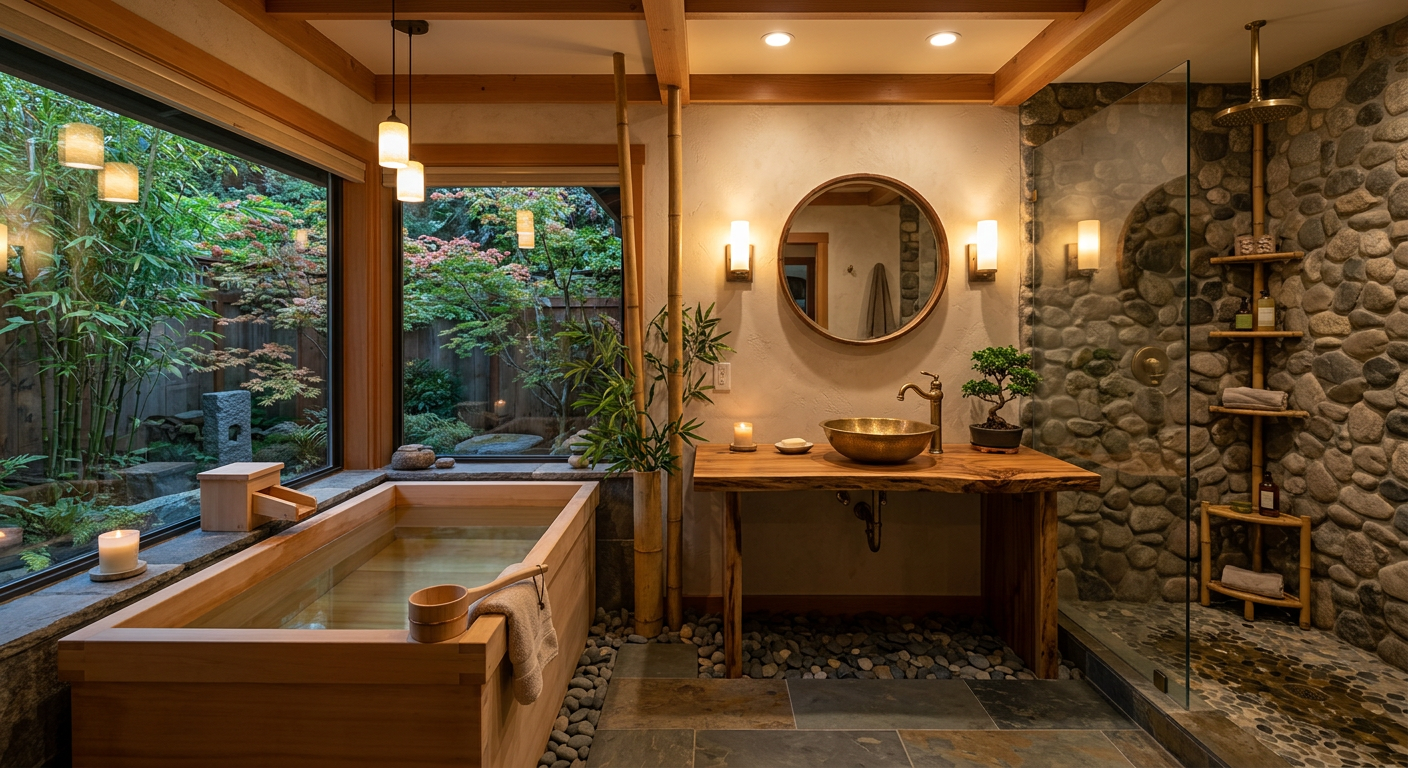
A curbless (zero-threshold) shower removes the step-over curb entirely. This is one of the top bathroom remodel trends for 2026. The bathroom floor flows right into the shower with no barrier. It looks incredible and makes the space feel bigger.
It costs more though. Expect an extra $1,000 to $2,000 compared to a standard curbed shower, and here’s why.
The subfloor needs to be recessed so the shower floor sits lower than the surrounding bathroom floor, allowing for the required 1/4 inch per foot slope toward the drain while keeping the transition flat. In many homes, that means modifying floor joists or adding a structural pan.
The waterproofing also gets more involved because there’s no curb to contain water. The membrane has to extend well beyond the shower area, and you need a linear drain at the entry or along the back wall.
Is curbless right for your bathroom?
I recommend curbless when the bathroom is large enough (at least 60 square feet), the subfloor allows modification, and the homeowner values that open, spa-like look. For smaller bathrooms or second-floor jobs where subfloor work gets complicated, a low-profile 1-inch curb gives you 90% of the look at lower cost.
Why Waterproofing Is the Most Important Part of Your Shower
This is where I get on my soapbox. I’ve ripped out more failed showers than I can count, and 9 times out of 10 the problem is bad waterproofing. Water got behind the tile, soaked into the substrate, rotted the framing, and by the time the homeowner noticed, the damage was thousands of dollars deep.
I use the Schluter KERDI system on every shower I build. The KERDI membrane, pre-formed corners, shower tray, and sealing bands create a continuous waterproof envelope around the entire shower. No gaps. No weak points.
A full KERDI waterproofing system costs $1,600 to $3,200 depending on shower size. Is it more expensive than plastic sheeting behind cement board? Yes. Worth every penny? Absolutely. In 20+ years of doing this work, I’ve never had a Schluter shower fail.
Here in the Pacific Northwest, where moisture works against us 9 months of the year, cutting corners on waterproofing is the worst decision a homeowner or contractor can make. The work behind the walls matters even though you never see it. That’s the standard.
PNW Considerations for Walk-In Showers
Living in the Pacific Northwest means a few extra things to think about with your shower project.
Ventilation is non-negotiable. Washington state code requires a bathroom exhaust fan rated at least 50 CFM. For a large walk-in shower, I recommend 80-110 CFM. I install humidity-sensing fans that turn on automatically and run until moisture levels drop.
Moisture-resistant materials throughout. I use cement board (never green board) for the shower substrate, mold-resistant drywall on surrounding walls, and moisture-rated paint. Every seam gets sealed. In the PNW, assuming water will find a way in isn’t pessimism. It’s experience.
Heated shower floors. An electric radiant heat mat under the shower floor tile costs $500 to $1,200 installed and adds about $14 to $18 per month to your electric bill if you run it daily. On a cold January morning in Puyallup, stepping onto a warm tile floor instead of cold porcelain is the kind of upgrade homeowners tell me they wish they’d done sooner.
Common Questions About Walk-In Showers
How long does a walk-in shower installation take? A typical tub-to-shower conversion takes 2 to 3 weeks from demo to final cleanup. For a complete picture of bathroom project timelines and costs, check my bathroom remodel cost guide. Custom tile with detailed patterns may add another week. Waterproofing needs 24 to 48 hours to cure before tile goes on, and grout needs 24 hours before glass installation, so there are built-in wait times you can’t rush.
Does removing a bathtub hurt my home’s resale value? Not if you keep at least one tub in the house. Families with young children want a tub, and appraisers note whether the home has one. My advice: keep the hall bath tub and convert the primary. A well-built walk-in shower in the primary bathroom actually adds value because it’s what most buyers want.
Can I convert my tub to a walk-in shower if I have a slab foundation? Yes, but it costs more. Moving the drain location on a slab requires cutting into the concrete, which adds $1,500 to $3,000 to the project. If we can keep the drain in the same general area, the cost increase is minimal.
What size should a walk-in shower be? The minimum I recommend is 36”x48” for a comfortable single-person shower. For a more open feel, 36”x60” or 48”x60” is better. If you’re going curbless or want a built-in bench, aim for at least 60”x60”. The sweet spot for most primary bathrooms I remodel is 36”x60” or 42”x60”.
Is a frameless glass enclosure worth the cost? Frameless costs $1,600 to $4,000, compared to $800 to $1,500 for semi-frameless. The difference is mostly visual. Frameless uses thicker 3/8” to 1/2” tempered glass with minimal hardware, giving you an unobstructed view of your tile work. If you’re spending good money on custom tile, frameless glass lets you show it off. I install frameless on about 70% of my projects.
Ready to Talk About Your Walk-In Shower?
If you’re thinking about a walk-in shower or tub-to-shower conversion, I’d love to walk through your bathroom and talk about what’s possible. Every bathroom is different, and the best way to get an accurate number is a free in-home estimate where I can see the space and discuss what you’re looking for.
I’ve been in the trades for over 20 years and have been serving Puyallup and Pierce County since 2018. My crew and I treat every home like it’s our own. Contact us to schedule your free estimate, or call me at (253) 392-9266.