The countertop question comes up in every single kitchen remodel consultation I do. Without exception. The homeowner has narrowed their material list to 2-3 options. They’ve watched YouTube videos. They’ve read conflicting advice online. And they’re still not sure which one to pick.
I get it. Your countertop is the most visible and most used surface in your kitchen. You prep food on it, set hot pans near it, spill coffee on it, and lean on it every day. The wrong choice shows its flaws within a year. The right choice looks great and performs well for 15-20 years.
I’m Brad Zemke, owner of Pacific Remodeling in Puyallup. I’ve been in the trades for over 20 years and have installed countertops in hundreds of kitchens across Pierce County. I’ve seen every material perform in real homes over real time. Not in a showroom. Not in a manufacturer’s brochure. In kitchens where families actually cook.
Here’s my honest comparison of every major countertop material, with real costs for the Puyallup area and the durability information manufacturers don’t put in their marketing.
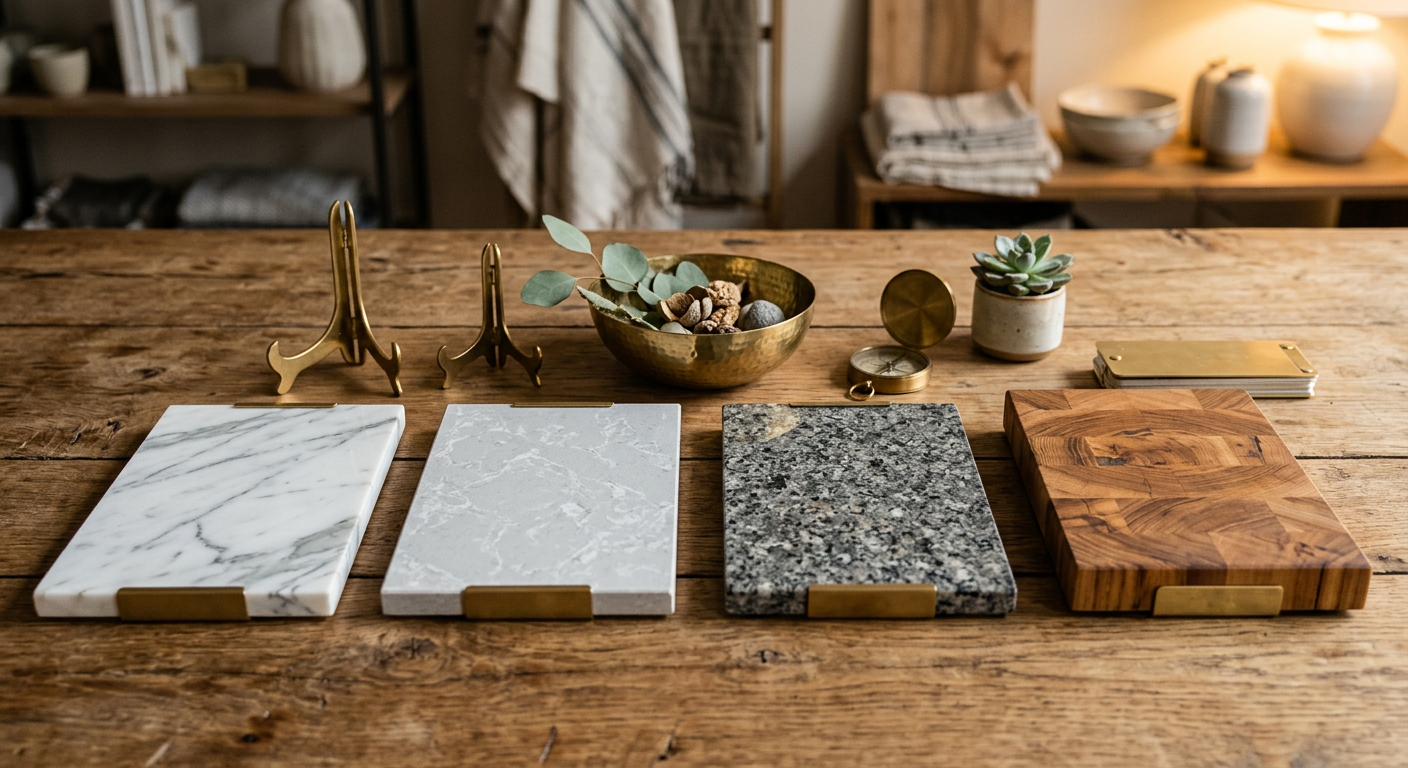
Quick Comparison: Every Major Countertop Material
| Material | Cost Per Sq Ft (Installed) | Maintenance | Heat Resistance | Stain Resistance | Lifespan | Best For |
|---|---|---|---|---|---|---|
| Quartz | $50 - $100 | None | Moderate (use trivets) | Excellent | 20-25+ years | Most kitchens |
| Granite | $45 - $95 | Annual sealing | Excellent | Good (when sealed) | 20-30+ years | Natural stone lovers |
| Marble | $60 - $120 | Regular sealing | Moderate | Poor | 15-25 years | Low-use areas, baking |
| Butcher block | $30 - $70 | Regular oiling | Poor | Poor | 10-20 years | Island accents, farmhouse style |
| Laminate | $20 - $40 | None | Poor | Good | 10-15 years | Budget projects |
| Quartzite | $70 - $130 | Annual sealing | Excellent | Good (when sealed) | 25-30+ years | Premium natural stone |
| Concrete | $65 - $120 | Periodic sealing | Good | Moderate | 20+ years | Industrial/modern style |
| Solid surface | $35 - $75 | None | Poor | Good | 15-20 years | Budget-friendly smooth look |
For a typical 30-square-foot kitchen countertop (average for Pierce County homes), total installed cost ranges from $600-$900 for laminate to $2,100-$3,900 for quartzite. Most of my clients land in the $1,500-$3,000 range with quartz or granite.
Quartz: My Top Recommendation for Most Kitchens
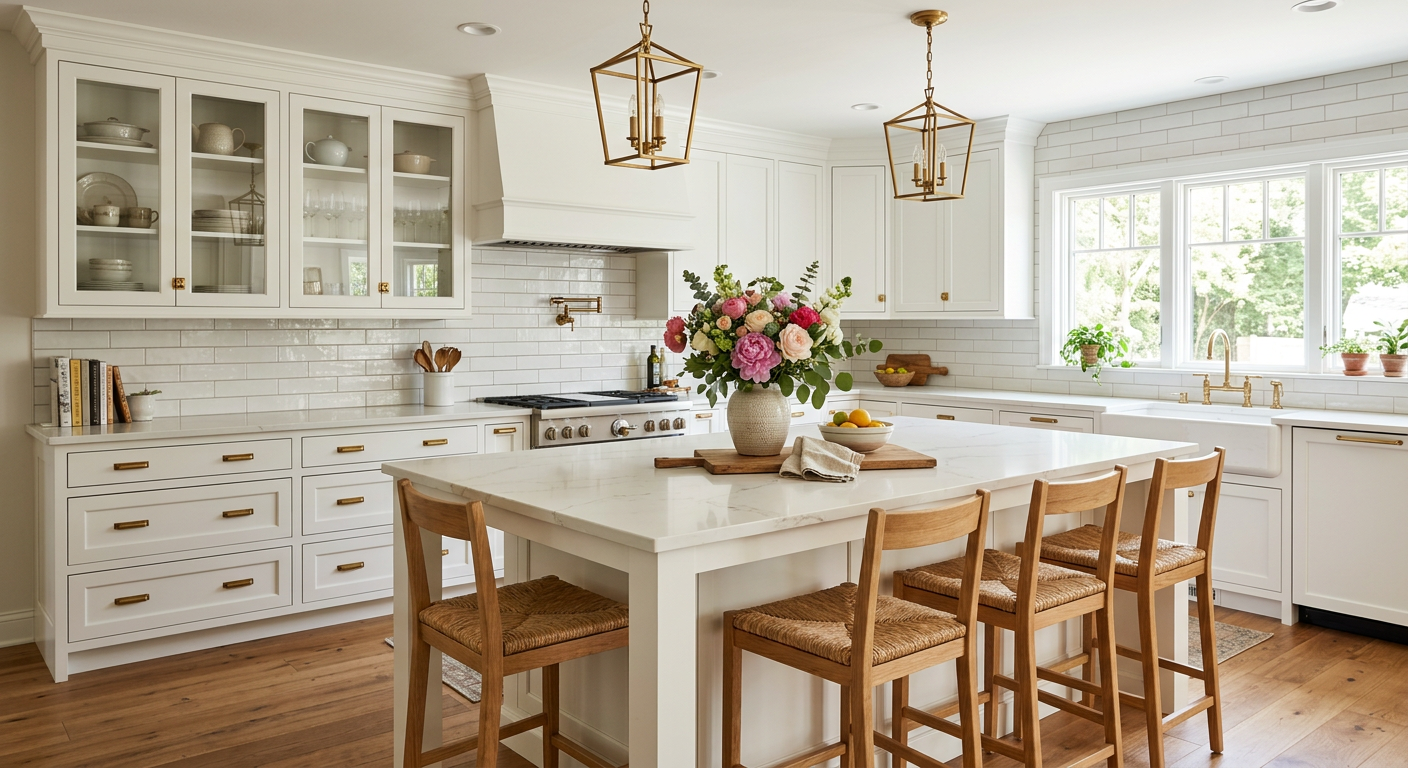
I install more quartz than any other material. Probably 55-60% of my kitchen countertop projects end up with quartz. There’s a reason for that.
Quartz is engineered stone made from roughly 90-95% ground natural quartz crystals bound with polymer resins. It’s manufactured, which means the color and pattern are consistent across slabs. No surprises. What you see in the showroom sample is what you get in your kitchen.
Why I recommend it:
Zero maintenance. Quartz is non-porous. It never needs sealing. It doesn’t absorb liquids. You spill red wine, coffee, or tomato sauce? Wipe it up. Done. After 20 years, I’ve never had a client call me about a stain on a quartz countertop. I can’t say that about any other material.
Extremely durable. Quartz rates about 7 on the Mohs hardness scale. It resists scratches from normal kitchen use. I’ve seen quartz countertops that are 15 years old and still look like the day they were installed.
Massive design range. Modern quartz comes in hundreds of colors and patterns. The marble-look options from brands like Cambria, Caesarstone, and Silestone are so convincing that most people can’t tell them apart from real marble without touching the surface. You get the marble look without the marble problems.
Where quartz falls short:
Not heat-proof. Setting a 400-degree pan directly on quartz can damage the resin. The surface can discolor or even crack from thermal shock. Always use trivets. This is the number one thing I tell clients when their quartz gets installed.
UV sensitivity. Quartz can fade or yellow with prolonged direct sunlight exposure. If your countertop sits under a skylight or next to a south-facing window that gets direct sun for hours, mention this to your fabricator. Some colors are more UV-stable than others.
Cost. Quartz isn’t cheap. At $50-$100 per square foot installed, a 30-square-foot countertop runs $1,500-$3,000. But compared to the hassle of sealing granite every year or babying marble to avoid stains, I think the no-maintenance factor makes quartz the best long-term value.
For a deep dive into quartz specifically, including brand comparisons and how it stacks up against granite, read my quartz vs. granite countertops guide.
Granite: The Natural Stone Classic
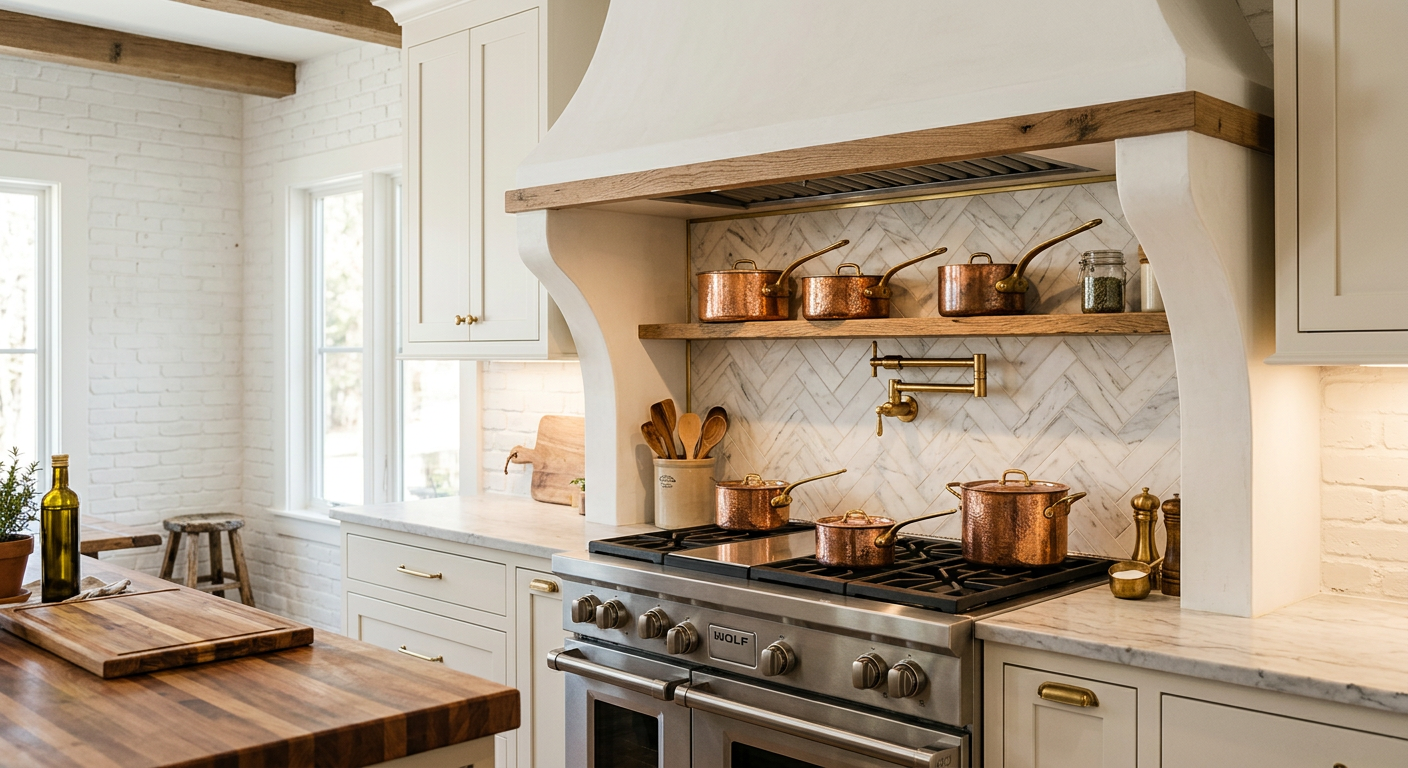
Granite ruled the kitchen countertop market for 20 years. It’s lost ground to quartz recently, but it’s still a strong choice and one I install regularly.
Every granite slab is unique. The color, veining, and pattern come from millions of years of geological formation. No two slabs are identical. For homeowners who want one-of-a-kind natural character, nothing else compares.
Why clients choose it:
Heat resistance. Granite handles hot pans far better than quartz. You can set a pot directly on granite without damage (though I still recommend trivets as a habit). For serious cooks, this matters.
Natural beauty. The depth and variation in a granite slab can’t be replicated by any manufactured material. The crystals catch light differently depending on the angle. In person, the best granite slabs are stunning.
Proven track record. Granite countertops installed 20-30 years ago still look good if they’ve been maintained. The material itself is practically indestructible.
Where granite falls short:
Requires sealing. Granite is porous. Without sealing, it absorbs liquids and stains. Annual sealing takes about 30 minutes and costs $15-$30 for the sealer. Most homeowners do it once and then forget. By year 3, they have a stain ring from a coffee mug that won’t come out.
Inconsistency. The slab you pick at the stone yard might not match the one that ends up in your kitchen if they’re from different blocks. Always see the actual slab before the fabricator cuts it. Don’t choose granite from a small sample chip. What looks great in a 4-inch square might look very different across 30 square feet.
Can chip at edges. A hard impact on a granite edge (dropping a heavy pot, for example) can chip it. Chips are repairable but visible. Eased or bullnose edges are more chip-resistant than sharp mitered edges.
Cost in Pierce County: $45-$95 per square foot installed. Basic granite (Uba Tuba, Santa Cecilia) sits at the lower end. Exotic patterns (Blue Bahia, Taj Mahal) push past $100 per square foot.
Marble: Beautiful but High-Maintenance
Marble is the material I get the most questions about and the one I recommend least for kitchen countertops. It’s gorgeous. I won’t argue that. But it’s not designed for the abuse a kitchen puts it through.
The appeal is real. Marble’s veining, depth, and cool surface temperature are unmatched. Bakers love it because the naturally cool surface is perfect for rolling dough. The look is timeless. Nobody walks into a marble kitchen and thinks “dated.”
The problems are also real:
It stains. Marble is porous and soft compared to granite and quartz. Lemon juice, tomato sauce, red wine, and even certain cleaning products can etch the surface, leaving dull marks that won’t wipe away. I’ve installed marble countertops for clients who cook regularly and watched them develop a patina of etch marks within six months. Some people love that aged look. Most don’t.
It scratches. Marble rates about 3 on the Mohs hardness scale. Quartz rates 7. Granite rates 6-7. A cutting board is mandatory on marble. Cutting directly on the surface leaves visible scratches.
It requires regular sealing. Every 6-12 months, depending on use. Skipping a sealing cycle means stains penetrate deeper.
My recommendation: Use marble for bathroom vanities, fireplace surrounds, or as a small section of kitchen counter designated for baking. For the main kitchen work surface, go with quartz in a marble-look pattern. You get 90% of the visual appeal with 10% of the maintenance headaches.
Butcher Block: Warm but Limited
Butcher block adds warmth and character that no stone surface can replicate. The wood grain, the natural color variation, and the feel under your hands create a kitchen with personality.
Where it works: As an island top in a farmhouse or transitional kitchen. Paired with stone on the perimeter counters and wood on the island, the combination looks intentional and beautiful.
Where it doesn’t work: As the only countertop surface in a kitchen. Wood around the sink swells from water exposure. Wood near the stove scorches from heat. Wood stains from oils, wine, and acidic foods. I’ve replaced butcher block counters that were warped, cracked, and discolored after just 5-6 years of heavy kitchen use.
Maintenance reality: Butcher block needs oiling every 4-6 weeks with food-safe mineral oil to prevent drying and cracking. Most homeowners do it religiously for the first few months, then taper off. By year two, the wood is dry and starting to crack at the end grain.
Cost: $30-$70 per square foot installed, depending on wood species. Maple is the most common. Walnut is the most expensive. Both perform similarly.
My recommendation: If you love the look, use butcher block on the island and quartz on the perimeter. Best of both worlds. And keep a bottle of mineral oil next to the stove as a visual reminder to oil it.
Laminate: Better Than You Think
Modern laminate countertops bear no resemblance to the laminate from the 1990s. Brands like Wilsonart, Formica, and Pionite offer patterns that convincingly mimic granite, marble, and wood at a fraction of the cost.
Cost: $20-$40 per square foot installed. A full kitchen for $600-$1,200. That’s roughly one-third the cost of quartz.
Durability: Laminate resists stains well and cleans easily. It’s not scratch-proof (cutting directly on it will leave marks) and it’s definitely not heat-proof (a hot pan will scorch the surface). But for a countertop that gets wiped down daily and treated with basic care, laminate holds up fine for 10-15 years.
When it makes sense: Budget-conscious remodels. Rental properties. Kitchens where you plan to upgrade again in 5-7 years. Or situations where you want to allocate more budget to cabinets and flooring instead of countertops.
The honest trade-off: Laminate doesn’t feel premium. When a buyer touches a laminate countertop and then touches quartz, the difference is obvious. For resale, quartz or granite send a stronger signal. For personal use within a budget, laminate gets the job done without apology.
Quartzite: The Premium Natural Option
Don’t confuse quartzite with quartz. They’re completely different materials. Quartzite is a natural metamorphic rock, harder than granite, with a look that falls somewhere between marble and granite. It’s beautiful, durable, and expensive.
Cost: $70-$130 per square foot installed. A 30-square-foot countertop runs $2,100-$3,900.
Durability: Quartzite is extremely hard (7 on the Mohs scale) and handles heat well. It’s the natural stone option that comes closest to matching quartz’s durability while offering the uniqueness of natural stone.
Maintenance: Like granite, quartzite is porous and needs annual sealing. The density varies by slab, so some quartzite is more porous than others. Have your fabricator test the specific slab’s absorption rate before you commit.
When it makes sense: Homeowners who want natural stone character with better durability than marble and are willing to pay the premium over granite. Quartzite works particularly well in high-end kitchens where the countertop is a focal point.
PNW Considerations for Countertop Selection
Living in the Pacific Northwest adds a few factors to the countertop decision that don’t apply in drier climates.
Humidity and moisture. Our climate is humid, and kitchens near sinks and dishwashers see constant moisture. Porous materials (granite, marble, quartzite, butcher block) need more diligent sealing and maintenance here than in Arizona or Colorado. Non-porous materials (quartz, laminate, solid surface) have an advantage in our environment.
Temperature fluctuations. PNW homes can get cold in winter, especially kitchens against exterior walls. Stone countertops feel cold to the touch in an unheated kitchen. Not a dealbreaker, but worth knowing if you’re sensitive to it.
Natural light. Many Pierce County homes have significant tree cover that filters natural light. Darker countertop colors can make a kitchen feel smaller. If your kitchen doesn’t get much natural light, lighter countertop colors help the space feel open and bright.
Water hardness. Puyallup’s water isn’t extremely hard, but mineral deposits do build up over time on unsealed surfaces. On dark granite, water spots and mineral rings are visible. Quartz and laminate hide this issue better.
How to Pick the Right Countertop for Your Kitchen
After doing this work for over two decades, I’ve boiled the decision down to three questions:
1. How much maintenance will you actually do?
Be honest with yourself. If you’ll seal your counters annually without fail and wipe up spills immediately, granite and marble are viable options. If you want a surface you can ignore for 20 years, quartz or laminate is your answer.
2. How much do you cook?
Heavy cooks need surfaces that handle heat, stains, and daily abuse. Quartz and granite hold up best. Bakers who work with dough might want one section of marble. Light cooks or those who mostly eat out can choose based on looks alone.
3. What’s your budget?
Countertops consume 10-15% of a kitchen remodel budget. If your total budget is tight, don’t overspend on countertops at the expense of cabinets and flooring. A great laminate countertop with nice cabinets looks better than a quartz countertop with cheap cabinets.
For a complete look at how countertops fit into your overall kitchen budget, read my kitchen remodel cost guide. And for the full quartz vs. granite deep-dive, check my quartz vs. granite comparison.
Frequently Asked Questions
What countertop does a Puyallup contractor recommend most?
Quartz. I install it in 55-60% of my kitchen projects. It combines durability, zero maintenance, and a wide design range at a reasonable price point. For most Puyallup homeowners, quartz hits the sweet spot between performance and cost.
How much do kitchen countertops cost in Pierce County?
For a standard kitchen with 30 square feet of counter space: laminate runs $600-$1,200 installed. Quartz runs $1,500-$3,000. Granite runs $1,350-$2,850. Marble runs $1,800-$3,600. These numbers include fabrication, installation, sink cutout, and standard edging.
Do quartz countertops stain?
Under normal kitchen use, no. Quartz is non-porous and doesn’t absorb liquids. However, leaving certain chemicals (permanent marker, harsh cleaners with high pH) on the surface for extended periods can cause discoloration. Normal cooking stains (coffee, wine, oil, tomato sauce) wipe right up.
Is granite outdated?
No. Granite is less trendy than it was 10 years ago, but it’s not dated. A well-chosen granite slab with a current edge profile looks completely current. What looks dated is the specific granite patterns popular in the mid-2000s (busy, multi-colored patterns like Giallo Ornamental or New Venetian Gold) combined with raised-panel oak cabinets. The material itself is timeless. The specific pattern and style combination is what dates it.
Can I put new countertops on existing cabinets?
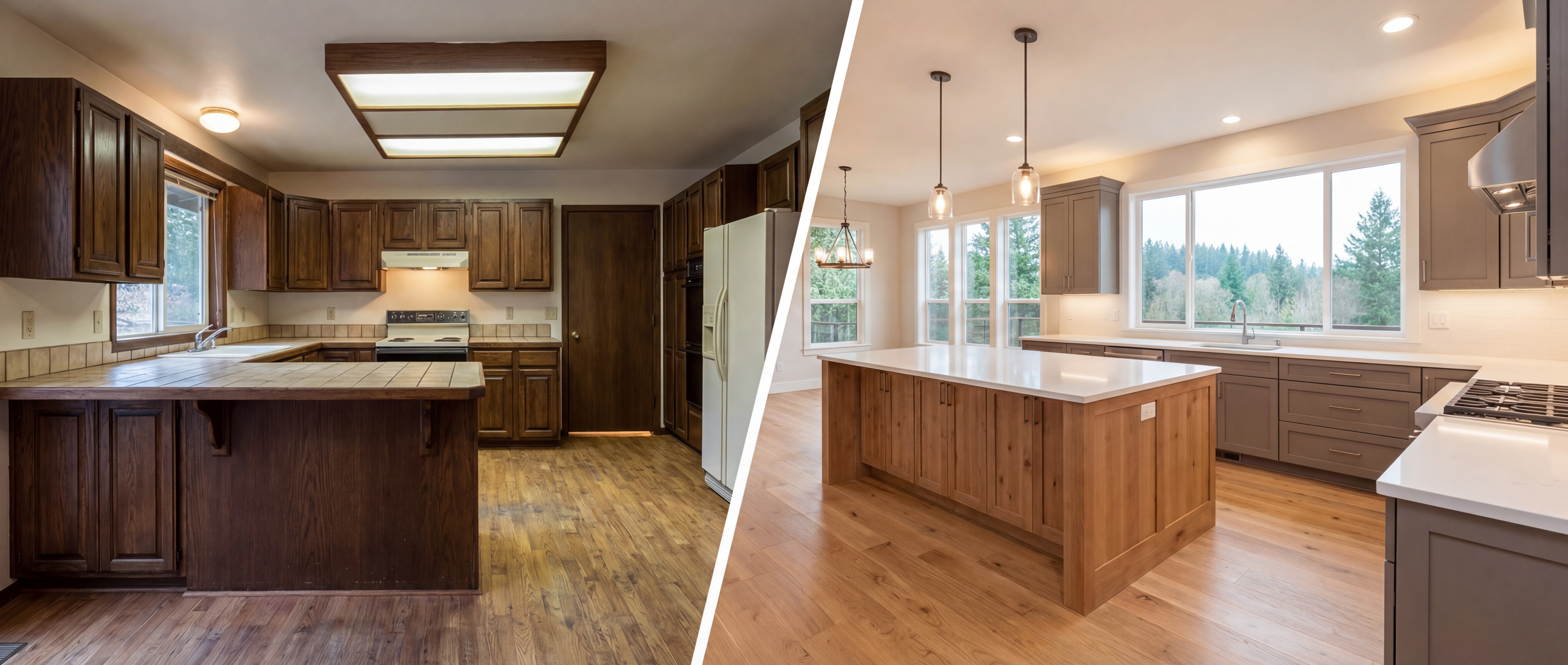
Yes, and I do this frequently. If your cabinets are in good structural condition, replacing just the countertops is a cost-effective update. A new quartz countertop on existing cabinets costs $1,500-$3,000 and transforms how the kitchen looks and feels. The only requirement is that the cabinets are level and can support the weight (granite and quartz are heavy).
Need Help Choosing?
I bring countertop samples to every consultation so you can see how different materials look in your actual kitchen, under your lighting, next to your cabinets. That’s the only way to make a confident decision. Showroom lighting is flattering. Your kitchen lighting is reality.
Call me at (253) 392-9266 or schedule a free consultation and I’ll help you pick the right countertop for your kitchen, your lifestyle, and your budget.
Brad Zemke, Owner Pacific Remodeling LLC Puyallup, WA