A couple from South Hill sat across from me at their kitchen table last fall, laptop open to a Pinterest board with about 200 saved pins. They wanted to gut their master bathroom and start over. New tile, new vanity, new shower, heated floors. “We’re thinking around $15,000,” the husband said. His wife nodded. They’d gotten that number from a quick Google search and a bathroom remodel calculator they found online.
I didn’t laugh. I never do. But I had to be honest with them, because that number was going to set them up for disappointment if nobody corrected it before they signed a contract.
Their project ended up costing $38,000. And they were thrilled with the result. But if I’d nodded along with that $15,000 figure, they would have either hired a contractor who cut corners to hit that price, or gotten halfway through demo and run out of money. I’ve seen both happen to homeowners who started with bad information.
That conversation happens at least twice a month. It’s the single most common question I get: How much does a bathroom remodel actually cost?
I’m Brad Zemke, owner of Pacific Remodeling here in Puyallup. I’ve been in the trades for over 20 years and running this business in Pierce County since 2018. I’m a third-generation carpenter. My dad taught me, and his dad taught him. I’ve done hundreds of bathroom remodels across Puyallup, Tacoma, Bonney Lake, Sumner, Edgewood, and the surrounding areas.
This post gives you real pricing. Not national averages that don’t apply here. Not calculator estimates that ignore the age of your home. Real costs from real projects I’ve completed in this market, in 2026 dollars.
What a Bathroom Remodel Costs in Puyallup (2026 Overview)
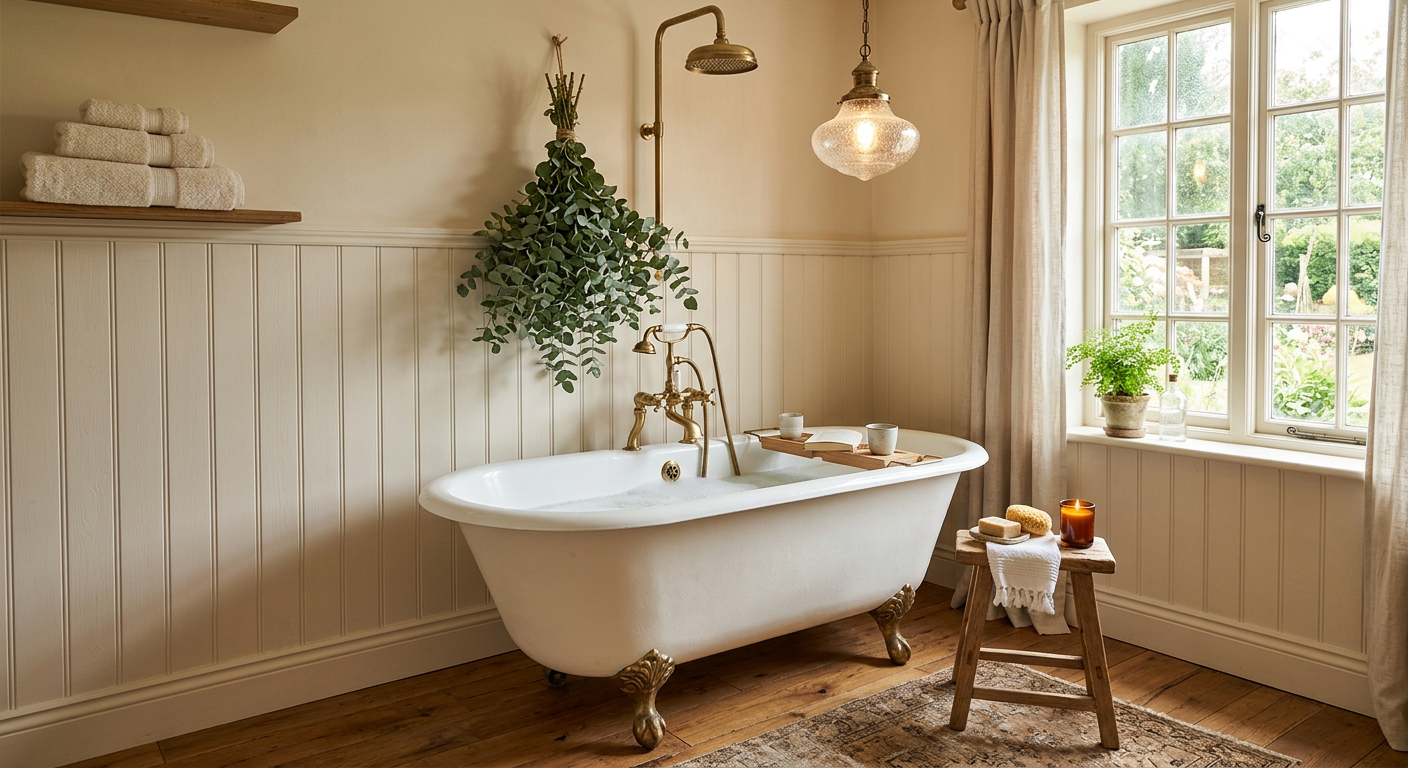
Before we get into the details, here’s the quick overview. These ranges reflect what I’m quoting and building right now in Pierce County, including labor, materials, permits, and standard project management.
| Project Type | Cost Range | Typical Timeline |
|---|---|---|
| Cosmetic refresh (vanity, fixtures, paint) | $8,000 - $16,000 | 1-2 weeks |
| Tub-to-shower conversion | $13,000 - $29,000 | 2-3 weeks |
| Mid-range full remodel | $20,000 - $40,000 | 4-6 weeks |
| High-end master bath | $40,000 - $56,000+ | 6-10 weeks |
| Add a new bathroom | $25,000 - $50,000+ | 8-12 weeks |
Those ranges are wide on purpose. A “mid-range full remodel” in a 2015 South Hill home with clean plumbing and no surprises behind the walls lands on the lower end. The same scope in a 1955 downtown Puyallup home with galvanized pipes, old wiring, and water damage behind the tile lands on the upper end. Sometimes it goes over.
Your home’s age, the scope of work, and the materials you pick will determine where you fall in those ranges. Let me walk through each project type so you know exactly what you’re getting into.
The Cosmetic Refresh: $8,000 to $16,000
This is the lightest touch. You keep the existing layout. The tub or shower stays where it is. The toilet stays where it is. You’re not moving any plumbing or changing the footprint of the room.
What you are doing:
- Replacing the vanity and countertop. A new vanity with a solid surface or quartz top runs $800 to $2,500 depending on size and material. A 36-inch vanity with a quartz countertop and undermount sink sits right around $1,200 to $1,800 in the mid-range.
- New faucet and fixtures. Budget $300 to $800 for a quality faucet, towel bars, toilet paper holder, and cabinet hardware. Cheap fixtures tarnish and leak. I install Moen or Delta on most of my projects because they hold up and the warranty is solid.
- New lighting. Swapping out a dated light bar for modern sconces or an updated vanity light runs $200 to $600 for the fixtures plus $300 to $500 for the electrical work.
- Fresh paint and new mirror. A repaint with quality bathroom paint (mold-resistant, semi-gloss) costs $400 to $800 including labor. A new framed mirror runs $150 to $500.
- New toilet. If the existing toilet is from the 90s, it’s using 3.5 gallons per flush instead of the current 1.28. A new Toto or Kohler comfort-height toilet installed runs $450 to $900.
What this changes: everything the eye touches. The room looks and feels different. You walk in and it reads as new, even though the bones haven’t changed.
Who this is for: homeowners who have a bathroom that functions fine but looks like it belongs in 2005. The layout works. The tile is passable. You just need the room to feel updated without spending $30,000 or living through a month-long remodel.
A cosmetic refresh is also a smart play if you’re selling your home in the next year or two. You spend $10,000 to $14,000 and the bathroom photographs well, shows clean, and doesn’t scare off buyers. That’s a strong return.
Quick Math: A $12,000 cosmetic refresh that helps your home sell for $8,000 more is a 67% return. That’s one of the best ROI moves in home improvement.
Tub-to-Shower Conversion: $13,000 to $29,000
This is one of my most popular projects. I do tub-to-shower conversions almost every week. The trend has been moving this direction for years, and it’s only accelerating. Most homeowners I talk to don’t use their bathtub. They shower. A walk-in shower gives them more room, easier access, and a more modern look.
Here’s what this project involves:
- Demo the existing tub and surround. This takes a day. We pull the tub, remove the old tile or surround, and expose the wall framing and subfloor. This is also the moment we find out what’s hiding back there.
- Plumbing modifications. The shower valve moves to a different height. The drain may need to be relocated. If you’re going from a tub to a curbless (zero-threshold) shower, the drain work gets more involved. Plumbing modifications typically run $1,500 to $3,500 depending on scope.
- Waterproofing. This is where I refuse to cut corners. We use Schluter Kerdi or a liquid-applied membrane on every shower. Full coverage. Curb to ceiling. The waterproofing system on a well-built shower costs $800 to $1,500 in materials and labor, but it’s the single most important element in the entire project. A shower that leaks destroys everything around it. Slowly. For years. Before you ever see the damage.
- Tile. The shower walls and floor get tiled. Depending on your selection, tile materials run $5 to $30 per square foot, and installation labor runs $8 to $15 per square foot on top of that. A typical shower has 80 to 120 square feet of tile surface. At mid-range numbers, you’re looking at $1,500 to $3,000 in tile materials and $1,000 to $1,800 in tile labor.
- Glass enclosure. A frameless glass door and panel typically costs $1,200 to $3,000 installed. Semi-frameless comes in at $800 to $1,500. I recommend frameless if your budget allows it. It looks cleaner, doesn’t trap water in tracks, and lasts longer.
- Fixtures. A quality showerhead, valve trim, and accessories run $400 to $1,200. A rain head with a handheld combo is the most requested setup right now.
If you want a deep dive on shower options, materials, and more detailed pricing, I wrote a full breakdown: Walk-In Shower Ideas and Costs.
The lower end of this range ($13,000 to $18,000) gets you a solid, well-built shower conversion with standard porcelain tile and a semi-frameless glass door. The upper end ($22,000 to $29,000) includes custom tile patterns, a curbless entry, linear drain, frameless glass panels, and upgraded fixtures. Both get the same level of waterproofing and craftsmanship. The difference is materials and complexity.
Pro Tip: Waterproofing is the single most important line item in a shower build. A Schluter Kerdi or liquid-applied membrane costs $800 to $1,500, but it protects your entire investment from water damage that can cost $10,000+ to repair.
Mid-Range Full Remodel: $20,000 to $40,000
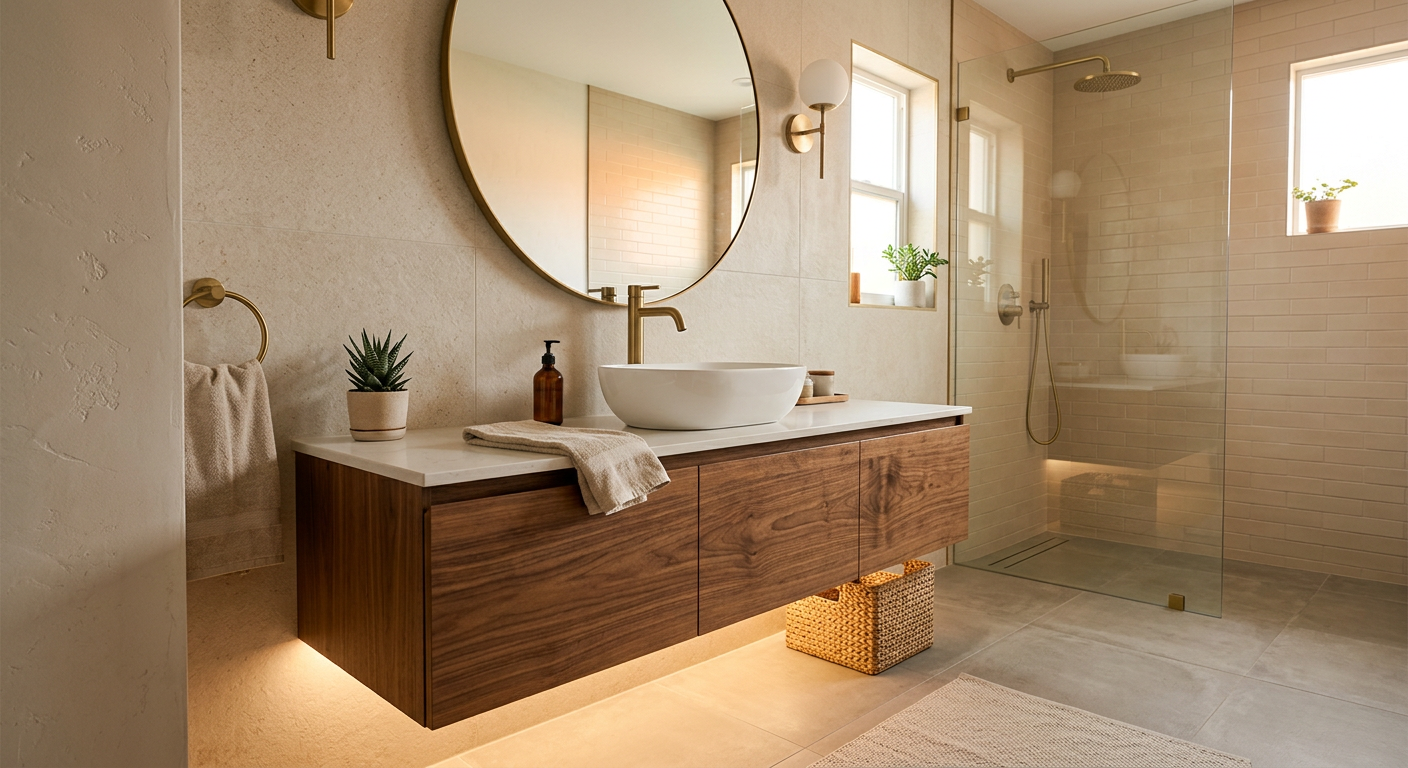
This is the project most people picture when they say “bathroom remodel.” You’re gutting the room and rebuilding. Everything old comes out. Everything new goes in.
A typical mid-range full remodel includes all of the following:
Demo and disposal. We strip the bathroom down to studs and subfloor. Old tile, drywall, vanity, toilet, tub or shower, flooring, lighting, mirror. All of it goes. Demo on a standard bathroom takes 1 to 2 days and costs $1,500 to $3,000 depending on the size of the room and how many layers of old material we’re pulling. I’ve pulled up four layers of flooring in a single bathroom. Vinyl over tile over vinyl over the original linoleum. Every layer adds time.
Rough plumbing and electrical. Once the room is stripped, we do any rough plumbing changes and electrical updates. If you’re keeping the same layout (toilet, vanity, and shower in the same spots), this runs $1,500 to $3,000. If you’re moving fixtures to new locations, the cost jumps. Moving a toilet drain 4 feet costs $2,000 to $4,000. Moving a shower drain can cost $2,000 to $5,000 depending on what’s below the floor. On a slab? Even more.
Electrical updates. Most bathrooms I remodel need electrical work. At minimum, you need a GFCI-protected circuit, an exhaust fan (which I upgrade to a Panasonic WhisperFit on nearly every job because they’re quiet and they work), and updated lighting. Electrical updates typically run $1,500 to $3,000. If we’re adding heated floors, that adds $800 to $1,500 for the electric heating mat plus $500 to $800 for a dedicated circuit and thermostat.
Shower or tub. In a full remodel, you’re choosing between a new shower, a new tub, or a tub/shower combo. Most of my clients in the master bath go shower-only with a custom tile shower. In a hall bath or kids’ bath, they often keep a tub. A new tub installed with a tile surround runs $3,500 to $7,000 in the mid-range. A custom tile shower runs $8,000 to $18,000 depending on size and materials.
Vanity and countertop. A 48-inch to 60-inch vanity with a quartz countertop and undermount sink is the most common configuration I install. Cost: $1,200 to $3,500. Dual sinks in a 60-inch vanity add about $300 to $500. Want something custom built? That jumps to $3,000 to $6,000+.
For detailed countertop material options and pricing, check out our countertop guide.
Floor tile. Bathroom floor tile installation typically runs $1,200 to $3,000 for a standard bathroom (40 to 60 square feet of floor). Large-format porcelain tile (12x24 or larger) is the most popular choice. It looks clean, requires fewer grout lines, and works well with radiant heat mats if you go that route.
Paint, trim, and finishing details. Fresh paint, new baseboards, door and window trim, caulking, and final touch-up. This rounds out at $800 to $1,500.
A real-world example: I completed a master bathroom remodel in a 2004 South Hill home last year. The room was about 75 square feet. We did a full gut, replaced the tub with a tiled walk-in shower (porcelain tile, frameless glass, rain head), installed a 48-inch vanity with quartz top, new toilet, new lighting, new exhaust fan, and luxury vinyl plank flooring (the homeowner’s request for the floor instead of tile). Total project cost: $28,400. Timeline: 5 weeks from demo to final walk-through.
That’s a typical mid-range result. Not the cheapest option. Not loaded with upgrades. A solid, well-built bathroom with quality materials and proper waterproofing that will last 20+ years.
High-End Master Bath: $40,000 to $56,000+
High-end is where design meets craftsmanship and the material budget opens up. These projects are about creating a space that feels like a retreat. My clients at this level have specific visions. They’ve saved images. They know what they want.
What separates a high-end remodel from mid-range:
Custom tile work. This is the biggest single cost difference. Instead of a standard porcelain tile laid in a straight set pattern, you’re looking at large-format marble-look porcelain, natural stone accents, mosaic feature walls, waterjet patterns, or handmade zellige tiles. Material costs jump to $15 to $30+ per square foot, and installation labor increases because the cuts are more complex and the layout requires precision. A high-end shower with a feature wall, floor-to-ceiling tile, and a niche with accent tile can run $12,000 to $20,000 for tile alone.
Heated floors. Electric radiant floor heat is one of the best upgrades you can put in a bathroom. You step out of the shower onto a warm floor instead of cold tile. The system itself costs $800 to $1,500 for the heating mat and thermostat. Installation adds $500 to $1,000. Total: around $1,300 to $2,500. For the comfort it provides, it’s one of the highest-value upgrades in the entire project.
Frameless glass shower enclosure. At this level, you’re doing a full frameless glass panel setup. No doors with tracks. Typically a fixed panel with a swinging door, or a walk-in configuration with just glass panels and no door at all. Cost: $2,000 to $3,000 installed.
Dual vanities. A high-end master bath usually has a 60-inch to 72-inch double vanity or two separate vanity stations. With quartz or natural stone countertops, this runs $2,500 to $5,000+ depending on material and configuration.
Freestanding tub. Some of my high-end clients want both a walk-in shower and a freestanding soaking tub. A quality freestanding tub (acrylic or composite stone) runs $1,500 to $4,000 for the tub alone. Installation with a freestanding tub filler adds another $1,000 to $2,500 for the fixture and plumbing. You also need the floor space for it. A freestanding tub only works if your bathroom has at least 90 to 100 square feet.
Upgraded fixtures. Brushed gold, matte black, polished nickel. The finish matters at this level. A full set of high-end fixtures (shower valve and trim, rain head, handheld, tub filler, faucets, towel bars, robe hooks, toilet paper holder) runs $2,000 to $5,000 depending on the brand and finish.
Built-in storage. Custom niches, recessed medicine cabinets, linen towers. Design details that keep the space clean and uncluttered. This adds $1,000 to $3,000 depending on scope.
Upgraded lighting. LED cove lighting, backlit mirrors, dimmable vanity sconces, recessed shower lighting. A lighting plan at this level costs $1,500 to $3,500 installed.
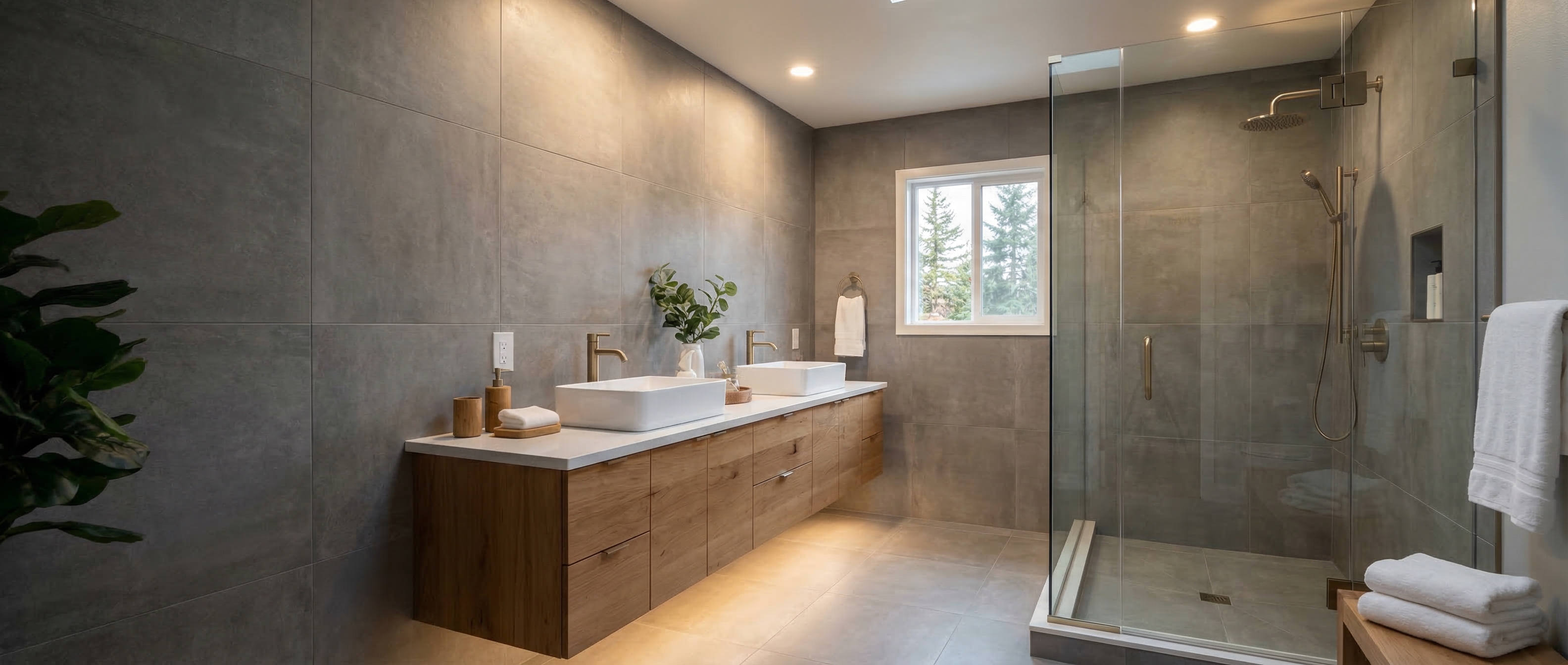
A real example: I finished a high-end master bathroom last summer in a newer home near Sunrise Village. The space was about 110 square feet. Large curbless shower with floor-to-ceiling porcelain slab panels, a linear drain, frameless glass, dual rain heads, a 72-inch double vanity with quartz countertop, a freestanding soaking tub, heated floors, backlit mirror, and all matte black fixtures. The total came in at $52,000. Timeline: 8 weeks.
Projects at this level require more planning time on the front end. Material selection alone can take 2 to 4 weeks because you’re coordinating tile, stone, fixtures, glass, and hardware to work together as a designed space. But the result is a bathroom that genuinely changes how you start and end your day.
Worth Knowing: Heated floors cost $1,300 to $2,500 total. For a feature you’ll use every morning for the next 20 years, that works out to about 35 cents a day.
Adding a Brand-New Bathroom: $25,000 to $50,000+
Adding a bathroom where one doesn’t exist is a different animal. You’re not just remodeling. You’re creating new plumbing runs, new electrical circuits, new ventilation, new walls, and new flooring in a space that was probably a closet, a bedroom, or unfinished basement space.
The biggest cost factors:
Plumbing. Running new supply lines and drain lines is the most expensive part of a bathroom addition. If you’re adding above an existing bathroom (stacking bathrooms is the cheapest configuration), the cost is lower because the drain lines are close. If you’re putting a bathroom on the other side of the house from existing plumbing, expect $5,000 to $12,000 just for rough plumbing.
Structural work. Depending on where you’re putting the bathroom, you may need to modify walls, add structural support for a heavy tub, or reinforce flooring for tile. Cost varies wildly, from $500 for minor framing to $5,000+ for structural modifications.
Ventilation. Every bathroom needs an exhaust fan vented to the outside. Routing the vent duct to an exterior wall or through the roof adds $500 to $1,500 depending on the run.
Finishing. The finish-out (tile, vanity, fixtures, toilet, lighting) follows the same cost ranges as a full remodel. A mid-range finish in a new 50-square-foot bathroom runs $12,000 to $20,000 on top of the rough-in costs.
A half bath (toilet and sink only, no shower or tub) is the least expensive addition, typically $12,000 to $25,000. A full bathroom with a shower runs $25,000 to $50,000+.
If you’re considering adding a bathroom, this is a project where permits are required every time. New plumbing and electrical work must pass inspection. I’ll cover permits more in the Pierce County section below.
What Drives Your Bathroom Remodel Cost
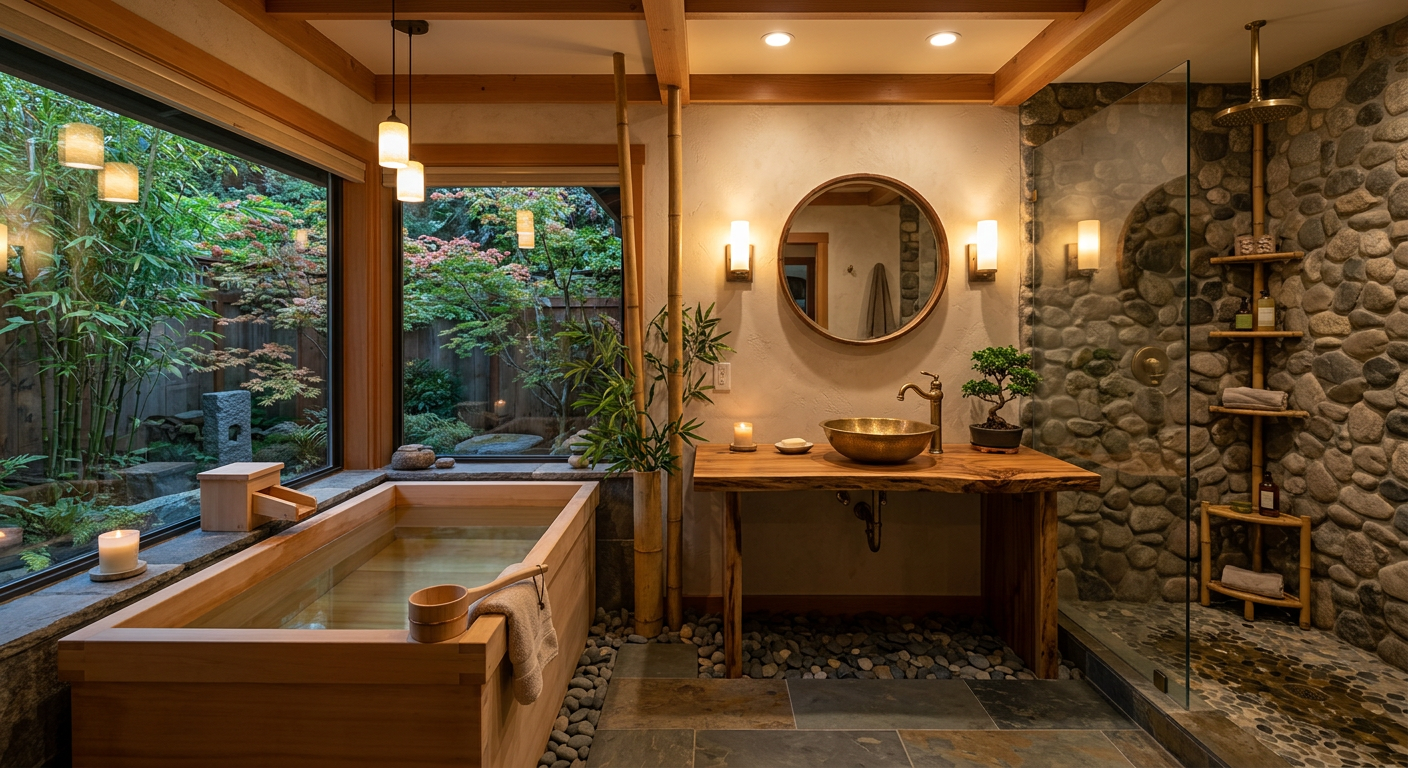
Now that you’ve seen the ranges by project type, let me break down the individual cost drivers. These are the line items that move your total up or down.
Tile Selection
Tile is the single biggest variable in a bathroom remodel budget. The difference between a $7/sqft porcelain tile and a $25/sqft natural stone tile on 150 square feet of surface area is $2,700 in materials alone. Add the difference in installation labor (natural stone is slower to cut and lay), and you’re looking at $4,000 to $6,000 of budget difference on tile alone.
Here’s how tile costs break down:
- Basic ceramic or porcelain: $3 to $8 per square foot (material)
- Mid-range porcelain (large format, rectified): $8 to $15 per square foot
- High-end porcelain, encaustic, or zellige: $15 to $30+ per square foot
- Natural stone (marble, travertine, slate): $10 to $40+ per square foot
Installation labor runs $8 to $15 per square foot for standard work, and $12 to $20+ per square foot for complex patterns, small mosaic, or natural stone.
My advice: spend your tile budget where it has the most visual impact. The shower walls and the floor. Those are the two surfaces you see the most. The rest can be a simpler, less expensive tile without hurting the overall look of the room.
Vanity and Countertop
The vanity is the centerpiece of the room. It’s what you see first when you walk in. Here’s the range:
- Stock vanity (30-36 inch) with laminate top: $400 to $900
- Mid-range vanity (36-48 inch) with quartz top: $1,200 to $2,500
- Large vanity (48-72 inch, double sink) with quartz: $2,000 to $4,000
- Custom-built vanity with stone countertop: $3,500 to $6,000+
I install quartz countertops on 80% of my bathroom projects. It doesn’t stain, doesn’t need sealing, handles moisture well, and comes in dozens of colors and patterns. Granite works too but requires periodic sealing. Marble looks beautiful but stains easily in a bathroom environment where soap, toothpaste, and water sit on the surface daily.
Plumbing Changes
If you keep everything in the same location, plumbing costs stay manageable. The moment you start moving things, costs climb.
- Replacing fixtures in the same locations: $800 to $2,000
- Moving a vanity to a different wall: $1,500 to $3,500
- Relocating a shower drain: $2,000 to $5,000
- Moving a toilet drain: $2,000 to $4,000
- Running new supply lines: $500 to $1,500
If you have an older home with galvanized steel supply lines or cast iron drain lines, I strongly recommend replacing them during a remodel while the walls are open. The material cost to switch to PEX supply and ABS/PVC drain is modest ($500 to $1,500 in most bathrooms), and you avoid the headache of those old pipes failing after your new bathroom is finished. I’ve seen homeowners skip this step to save money, then deal with a leaking galvanized fitting 18 months later that damaged the new vanity and floor. The repair cost more than the replacement would have.
Electrical Updates
Most bathrooms in homes built before 2000 need electrical work to meet current code. Here’s what to expect:
- GFCI outlets (required near water): $150 to $300 per outlet
- New exhaust fan (properly vented): $400 to $800 installed
- Updated lighting (vanity + overhead): $500 to $1,500
- Heated floor circuit and thermostat: $500 to $800
- Complete bathroom rewire (older homes): $1,500 to $3,000
The exhaust fan is non-negotiable. I don’t care if the existing one “works.” If it’s loud and weak, it’s not pulling enough moisture out of the room. Every bathroom I remodel gets a properly sized, properly vented exhaust fan. In the Pacific Northwest, moisture control isn’t optional. It’s your first line of defense against mold.
Shower Glass
Glass enclosures have a wide price range:
- Framed glass door: $500 to $900
- Semi-frameless glass door: $800 to $1,500
- Frameless glass door and panel: $1,200 to $2,500
- Custom frameless (walk-in panels, no door): $2,000 to $3,000+
Frameless glass costs more, but it changes the entire look of the shower. No metal frame blocking the tile work. Clean lines. Easy to maintain. If there’s one upgrade I push clients toward, it’s this one, because the cost difference between semi-frameless and frameless is often only $400 to $800, but the visual impact is significant.
The Hidden Surprises
This is where bathroom remodels go over budget. Not because the contractor padded the bid. Because nobody can see through walls.
Here’s what I find when I open up bathrooms in Pierce County homes:
-
Water damage and rot. This is the most common surprise. The old shower was leaking. The caulk failed. The pan liner cracked. Water has been soaking into the subfloor and wall framing for years. I find some degree of water damage in roughly 4 out of 10 bathroom remodels. Minor rot repair costs $500 to $1,500. Major subfloor replacement runs $1,500 to $4,000. If the rot extends into the wall framing or floor joists, it can cost $3,000 to $8,000+ to repair.
-
Mold. Where there’s water damage, there’s often mold. Small patches of surface mold on framing get treated and sealed. If it’s extensive or in the subfloor cavity, professional remediation may be needed before we can rebuild. Remediation costs $500 to $3,000 depending on scope.
-
Outdated plumbing. Galvanized supply lines. Cast iron drain stacks with thinning walls. Polybutylene supply lines (common in homes built 1978 to 1995 and known for failure). Old shut-off valves that don’t actually shut off. When we find these, I recommend replacing them while the walls are open. Cost: $500 to $3,000 depending on what needs to go.
-
Asbestos in old flooring or wall texture. Homes built before 1980 may have asbestos in vinyl floor tiles, the mastic adhesive beneath them, or in the wall texture compound. If present, it must be professionally abated before we can proceed. Abatement costs $1,000 to $4,000+ depending on the area affected.
-
Inadequate subfloor. Older homes sometimes have 3/8-inch plywood subfloor that’s insufficient for tile. We need to add a layer of 1/2-inch plywood and cement board to build a proper tile substrate. Cost: $500 to $1,200.
I tell every client: budget 10 to 20% above your expected cost for surprises. If we don’t find any, great. That money stays in your pocket. But if we open a wall and find rot or old plumbing, you’re prepared instead of panicked.
Budget Rule: Always set aside 10 to 20% of your project cost for hidden surprises. I find water damage behind walls in about 4 out of 10 bathroom remodels. Being prepared beats being panicked.
Pierce County and Puyallup: Local Factors That Affect Your Cost
I work in this market every day. There are specific things about Puyallup and Pierce County that affect what your bathroom remodel will cost.
Permit Requirements
The City of Puyallup requires permits for bathroom remodels that involve plumbing changes, electrical work, or structural modifications. A cosmetic refresh (paint, vanity swap, new fixtures) typically does not require a permit. A full remodel almost always does.
Permit costs in Puyallup currently run $300 to $800 depending on the scope of work. The permit process adds 1 to 3 weeks to your timeline for plan review and scheduling inspections. But permits protect you. They ensure the work is inspected and meets code, which matters for your safety and your home’s resale value.
I handle permits on every project that requires them. I pull the permit, schedule the inspections, and make sure the work passes. That’s part of the job. For a full breakdown of what needs a permit and what doesn’t, read my guide to remodeling permits in Puyallup.
Older Puyallup Homes vs. Newer South Hill Homes
This is a huge factor that online cost calculators don’t account for.
Downtown Puyallup and older neighborhoods (1940s to 1960s homes): These homes were built before modern plumbing code, before GFCI requirements, and often before proper ventilation standards. When I remodel a bathroom in a 1950s home near downtown, I regularly find:
- Galvanized steel supply lines that are half-corroded and restricted
- Cast iron drain lines with thinning walls or failed joints
- No exhaust fan at all, or one that vents into the attic instead of outside
- Knob-and-tube wiring or ungrounded two-prong outlets near the sink
- Lath and plaster walls instead of drywall (harder to patch and finish around)
- Floor joists that are undersized by current standards
Each of these discoveries adds cost. Replacing the supply lines, adding proper ventilation, upgrading the electrical. None of it is optional once we’ve opened the walls. Code requires us to bring exposed systems up to current standards.
My rule for older Puyallup homes: budget 15 to 20% more than you would for the same project in a newer home. If the online calculator says $25,000 for a full remodel, plan for $29,000 to $30,000 in a pre-1970 home. That extra budget absorbs the system upgrades that are almost guaranteed.
South Hill and newer construction (1990s to present): Homes built in the last 30 years generally have PEX or copper supply lines, ABS drain lines, grounded wiring, and drywall. The systems are in better shape. Surprises still happen (even newer homes can have water damage from a failed shower pan or a slow leak), but the frequency and cost of hidden issues drops significantly.
In a post-2000 home, I typically see bathroom remodel costs land in the lower half of the ranges I’ve listed. Fewer surprises means fewer additions to the bill.
Pacific Northwest Moisture and Mold
I can’t write about bathroom remodels in this area without talking about moisture. We live in one of the dampest climates in the country. Annual rainfall in Puyallup averages about 40 inches. Humidity stays high for 8 months of the year. Mold loves these conditions.
In a bathroom, you’re adding even more moisture on top of that. Hot showers, standing water, condensation. If the waterproofing, ventilation, and construction details aren’t right, you’ll have mold growing inside your walls within a few years.
Here’s what I do on every bathroom remodel to prevent moisture problems:
- Full waterproofing membrane on all shower walls and the shower floor. Not just cement board. A true waterproof membrane (Schluter Kerdi or liquid-applied) that stops water from reaching the framing.
- Properly sized exhaust fan. Minimum 80 CFM for a standard bathroom, 110+ CFM for a master bath. Vented directly to the exterior. Not into the attic. Not into the soffit. Outside.
- Mold-resistant drywall (purple board or green board) in all wet areas outside the shower.
- Proper caulking and sealing at all transitions. Tile to tub, tile to glass, floor to wall, fixture penetrations.
- Slope and drainage. Shower floors slope to the drain at 1/4 inch per foot minimum. No flat spots where water pools.
These aren’t upgrades. They’re baseline requirements. A contractor who skips any of these in the Pacific Northwest is building you a problem. It just won’t show up until 3 to 5 years later, when the rot has already spread.
How Your Home’s Age Affects Total Cost
Here’s a summary of what I see across different home vintages in this market:
- Pre-1960 homes: Budget 20% above quoted cost for system upgrades and hidden issues. Galvanized plumbing, outdated electrical, possible asbestos, potentially undersized floor joists.
- 1960s-1980s homes: Budget 15% above quoted cost. Likely copper supply lines (good) but possibly cast iron drains, older electrical panels, and early-generation exhaust fans.
- 1980s-2000 homes: Budget 10% for contingency. Systems are generally in better shape, but polybutylene plumbing (if present) needs replacement, and early tile showers from this era often had inadequate waterproofing.
- Post-2000 homes: Budget 5 to 10% contingency. Modern systems, but water damage and poor original construction still happen. I’ve found failed shower pans in homes less than 10 years old.
How to Budget for Your Bathroom Remodel
Setting a realistic budget is the most important step in the entire process. More important than picking tile. More important than choosing fixtures. If your budget is wrong, everything else falls apart.
Start With Your Real Number
What can you actually spend? Not what you hope the project costs. Not the number from a Pinterest infographic. Your real, available budget. Whether that’s savings, a home equity line, or a combination, know the number before you call anyone.
If your real budget is $25,000, that’s your number. Now add 15 to 20% for contingency. That means your project plan should target $20,000 to $21,000 in planned costs, leaving $4,000 to $5,000 for surprises. If nothing goes wrong, that contingency becomes your “upgrade fund” or it goes back in your pocket.
Where to Spend and Where to Save
Not every dollar carries the same weight. Here’s where I tell clients to invest and where I tell them to pull back:
Spend more on:
- Waterproofing. This is the foundation of the entire project. If the waterproofing fails, everything on top of it fails eventually. Never cut this cost.
- Tile labor. Good tile work is obvious. Bad tile work is also obvious. Hire a skilled tile installer, even if the tile itself is a $6/sqft porcelain. Well-installed basic tile looks better than poorly installed expensive tile. Every time.
- The shower. This is the centerpiece of most bathroom remodels and the feature you interact with daily. A well-built shower with solid waterproofing, good tile, and quality glass will serve you for decades.
- Exhaust fan. Spend $100 extra on a quiet, high-CFM fan. You’ll actually use it if it doesn’t sound like a jet engine, and it will protect your investment from moisture damage.
Save money on:
- Vanity hardware. The difference between a $5 pull and a $15 pull is mostly marketing. Both function the same.
- Towel bars and accessories. Mid-range fixtures from Moen or Delta look nearly identical to high-end brands at half the price.
- Paint. Premium bathroom paint matters (go semi-gloss, mold-resistant), but the difference between a $40 gallon and a $70 gallon is minimal in performance. I use Sherwin-Williams or Benjamin Moore and the mid-tier lines work great.
- Light fixtures. You can find attractive, well-made vanity lights in the $80 to $150 range. You don’t need to spend $400 per sconce to get a clean, modern look.
- Floor tile. If you’re spending big on the shower tile, you can go with a simpler, less expensive porcelain on the floor. A $6/sqft floor tile looks perfectly fine next to a $20/sqft shower feature wall.
A Word on Financing
Many of my clients use a home equity line of credit (HELOC) to fund their bathroom remodel. Others save up over 6 to 12 months. Some use a personal renovation loan. I don’t offer in-house financing, but I’m always happy to discuss timing and phasing a project to fit your situation.
The key: don’t finance more than you can comfortably repay. A beautiful bathroom isn’t worth financial stress. If your budget only covers a cosmetic refresh right now, do the cosmetic refresh. You can always do a full remodel later when the budget allows.
Questions I Hear From Every Bathroom Remodel Client
What’s the average cost of a bathroom remodel in Puyallup?
The most common project I quote and build is a mid-range full remodel. That runs $20,000 to $40,000 in 2026 for a standard master bathroom in Pierce County. The “average” I see across all my bathroom projects (cosmetic to high-end) lands around $26,000 to $32,000. But averages can be misleading. Your cost depends entirely on your scope, your material choices, and the condition of your home.
How long does a bathroom remodel take?
A cosmetic refresh takes 1 to 2 weeks. A full remodel takes 4 to 6 weeks from demo to completion. A high-end master bath takes 6 to 10 weeks. These timelines assume materials are ordered and on-site before demo begins. If your tile is backordered or your vanity has a 6-week lead time, the project timeline extends. I always order long-lead materials before we schedule demo so the project flows without gaps.
Do I need a permit for a bathroom remodel in Puyallup?
If you’re changing plumbing, electrical, or structural elements, yes. A permit is required. Cosmetic work (paint, vanity swap, new fixtures with no plumbing changes) typically does not require a permit. I pull and manage permits on every project that needs one. For more detail, read my full guide to Puyallup remodeling permits.
Can I live in my home during a bathroom remodel?
Yes. Absolutely. You’ll need access to another bathroom while yours is out of commission, but you don’t need to move out. I coordinate the work to minimize disruption. We protect your floors, contain dust, and clean up at the end of each work day. The biggest adjustment is not having your primary bathroom for 4 to 6 weeks. If you have a second bathroom or even a half bath, you’ll be fine.
What’s the ROI on a bathroom remodel?
According to the 2025 Cost vs. Value Report, a mid-range bathroom remodel recoups about 60 to 67% of its cost at resale. A minor (cosmetic) bathroom update can recoup 70%+. But here’s the thing most people miss: ROI isn’t just about resale value. It’s about how you use the space for the 5, 10, or 15 years before you sell. If you remodel your bathroom and enjoy it daily for a decade, the return goes far beyond what a real estate appraiser puts on paper. I’ve had clients tell me their morning routine went from something they tolerated to something they actually look forward to. That’s real value.
What’s the single biggest factor in bathroom remodel cost?
Tile selection and the scope of tile work. It’s not even close. The difference between a basic porcelain tile shower and a custom multi-pattern natural stone shower can be $8,000 to $15,000 on tile alone. After tile, the next biggest factor is whether you’re moving plumbing or keeping everything in the same location. Moving drains and supply lines adds thousands.
Should I remodel my bathroom or move to a different house?
I get this question more than you’d think. Here’s how I frame it: add up the cost of selling your home (6% real estate commission, closing costs, moving expenses), the higher mortgage rate you’d get on a new home (rates today are significantly higher than what most people locked in during 2020-2021), and the time and stress of the entire process. If you love your neighborhood and your home’s layout works, a $30,000 bathroom remodel is almost always cheaper and less disruptive than moving to get a home with a better bathroom. Run the numbers. Usually the answer is obvious.
What are the cheapest bathroom upgrades that make the biggest difference?
If you’re on a tight budget, focus on what the eye sees first:
- New vanity and mirror ($800 to $2,000 installed). This single change can transform the room.
- New light fixtures ($300 to $600 installed). Swapping a dated light bar for modern sconces changes the entire mood.
- Fresh paint ($400 to $800). A clean coat of paint in a modern color makes everything around it look better.
- New hardware and accessories ($100 to $300). Towel bars, cabinet pulls, and a new toilet paper holder. Small cost. Noticeable change.
- New toilet ($450 to $900 installed). If yours is stained, wobbly, or old, a new comfort-height toilet is a surprisingly impactful swap.
Those five items together run $2,050 to $4,600. Not a full remodel. But a bathroom that looks and feels completely different.
What Happens When You Call Us
I want to remove the mystery from this process. Here’s exactly what happens if you reach out to Pacific Remodeling for a bathroom remodel:
Step 1: You call or fill out our online form. You tell us what you’re thinking. It can be vague (“I hate my bathroom”) or specific (“I want to convert my tub to a curbless shower with frameless glass”). Either works.
Step 2: I come to your home. I look at the existing bathroom. I measure it. I look at the plumbing access. I check the age of the home and the condition of what I can see. I ask about your goals, your style preferences, and your budget. This conversation usually takes 45 minutes to an hour.
Step 3: You get a detailed estimate. Not a one-line number. A line-by-line breakdown of what’s included: demo, plumbing, electrical, waterproofing, tile, vanity, countertop, fixtures, glass, flooring, paint, permits, and labor. You see exactly where your money goes. No hidden fees. No surprises in the contract. I also tell you what we might find once we open the walls and what those scenarios typically cost, so you’re prepared.
Step 4: Material selection. Once you approve the estimate, we go through material selection. I help you choose tile, vanity, countertop, fixtures, and hardware. I’ll show you what works in your budget and what I’ve seen perform well on other projects. If you already have everything picked out, we move faster.
Step 5: We build. My crew handles demo, rough-in, finish work, and cleanup. I’m on site managing the project and keeping you updated. If we find something unexpected behind the walls, I call you immediately, explain what we found, and give you the cost to fix it before we proceed. No surprise bills at the end.
Step 6: Final walk-through. We go through the finished bathroom together. I point out everything we did. You tell me if anything needs attention. We don’t collect final payment until you’re satisfied.
That’s it. No pressure. No games. Just honest work from a local contractor who treats your home the way I’d want mine treated.
Ready to Talk About Your Bathroom?
If you’ve been thinking about a bathroom remodel, you’ve already done the most important research by reading this far. You know the real costs. You know what drives those costs. You know what to budget for surprises.
The next step is simple. Give me a call at (253) 392-9266 or fill out the form on our contact page. We’ll set up a time for me to come look at your bathroom, talk through what you want, and give you a straight answer on what it will cost.
No sales pitch. No pressure. Just a contractor who’s been doing this for 20+ years, giving you honest numbers so you can make a good decision for your family and your home.
I look forward to hearing from you.
Brad Zemke, Owner Pacific Remodeling LLC Puyallup, WA