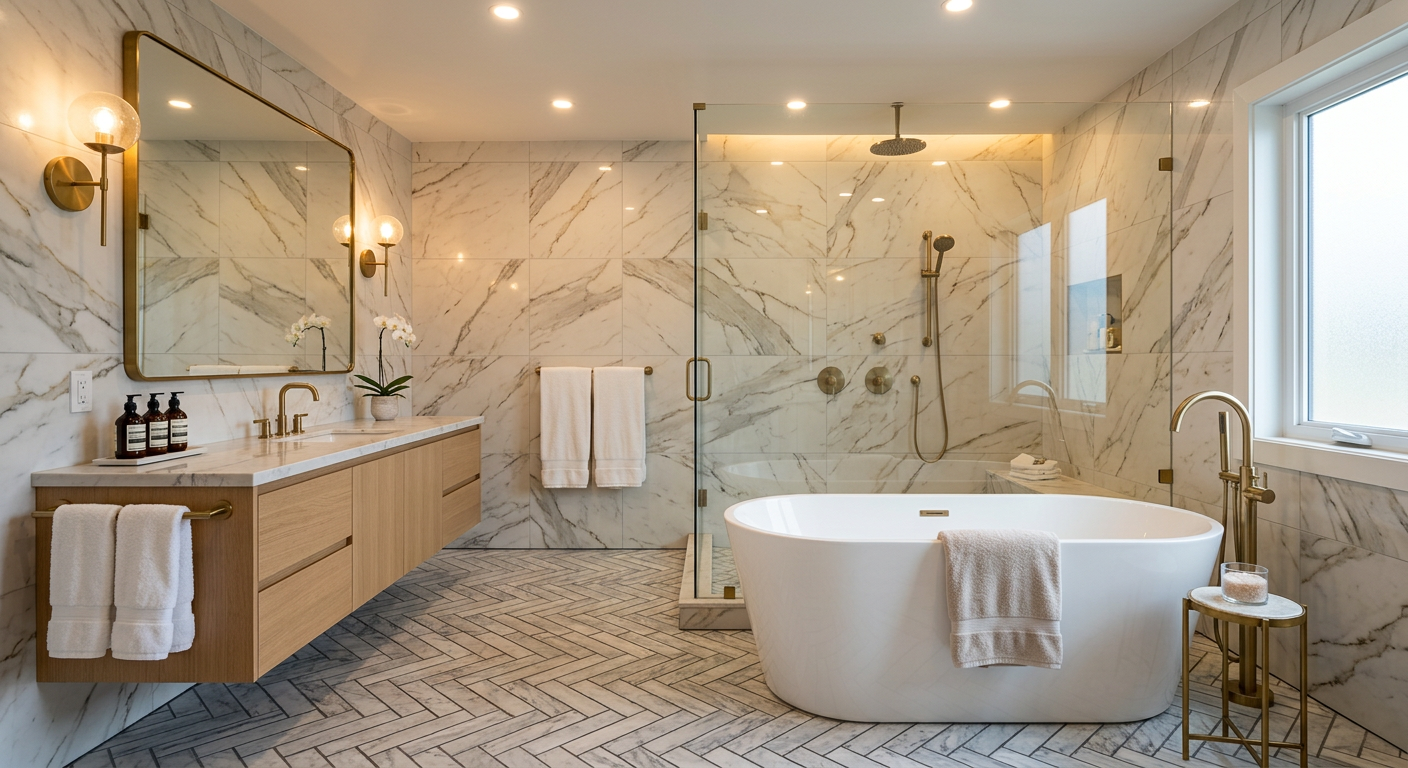
This one is personal for a lot of families. Maybe you’re watching a parent slow down. Maybe you’ve noticed that the step over the tub isn’t as easy as it used to be. Or maybe you’re in your 50s or 60s and thinking ahead, wondering how long your house will work for you the way it is right now.
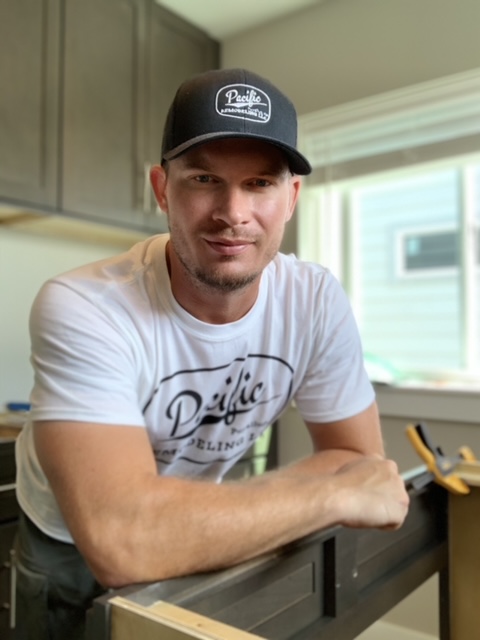
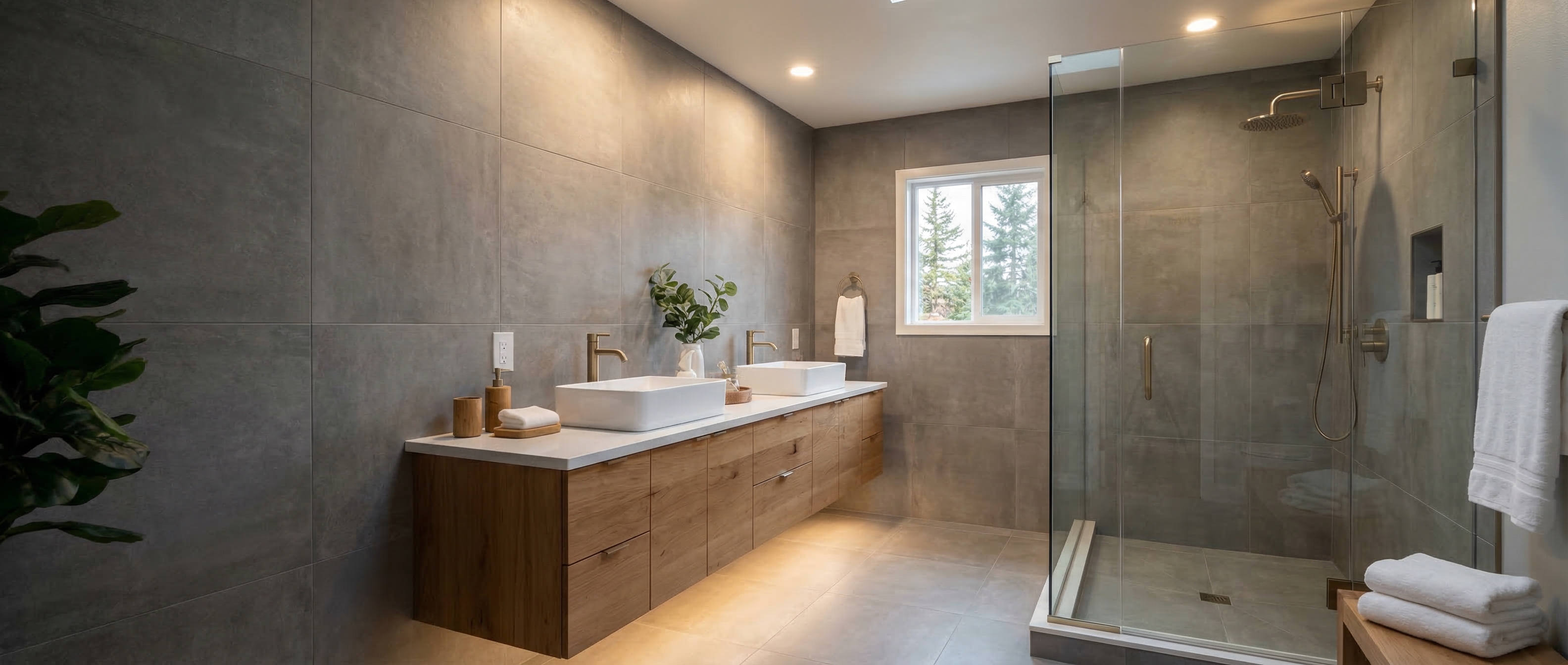
I get these calls more every year. And the first thing I tell people is this: an accessible bathroom remodel does not have to look like a hospital room. Not even close. The materials and design options available today mean you can build a bathroom that’s safe, comfortable, and flat-out beautiful, all at the same time.
Why More Homeowners Are Planning Ahead
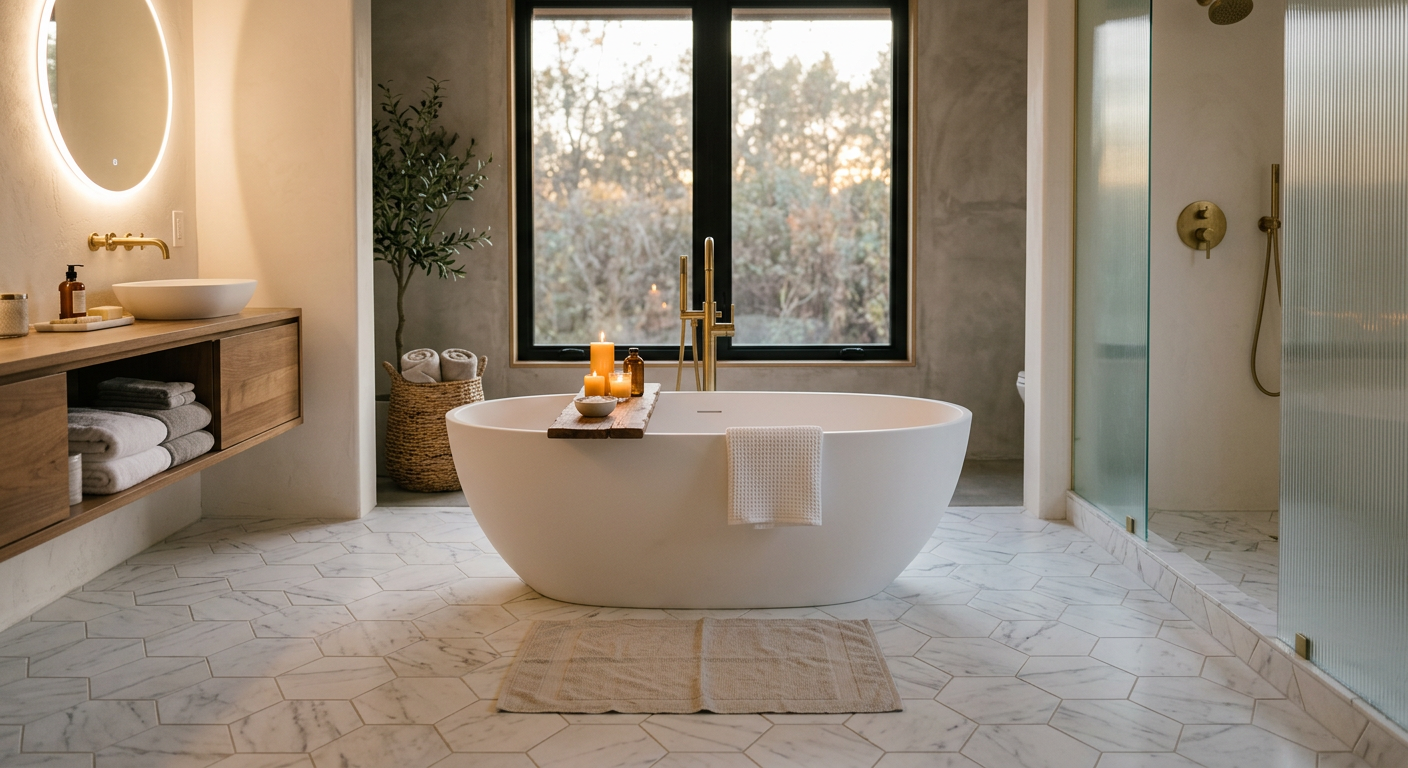
The numbers tell the story. According to AARP’s 2024 Home and Community Preferences Survey, 75% of adults over 50 want to stay in their current home as they age. That’s three out of four people. And nearly half of those surveyed said they’ll need home modifications to make that happen, with grab bars (72%) and entryway improvements (71%) topping the list.
The demand for aging-in-place remodeling is growing fast. The U.S. aging-in-place renovation market hit $5.27 billion in 2024 and is projected to reach over $9.2 billion by 2032, according to Verified Market Research. About 56% of remodelers now handle aging-in-place projects, and 73% say requests have increased over the past five years.
I’ve seen this firsthand in Puyallup and across Pierce County. A lot of the homes here, especially the ramblers built in the 1970s and 1980s on South Hill and in surrounding neighborhoods, are single-story. That’s already a huge advantage for aging in place. No stairs to deal with. The main challenge is usually the bathroom.
The Bathroom Is Where Falls Happen
Here’s the stat that gets people’s attention. The CDC reports that about 234,000 nonfatal bathroom injuries happen every year among adults in the U.S. Falls cause 81% of those injuries. For adults 65 and older, almost one-third of bathroom fall injuries result in fractures. Among adults 85 and older, 38% end up hospitalized.
Two-thirds of all bathroom injuries happen in the tub or shower. Getting in and out. Slipping on wet surfaces. Losing balance with nothing to grab onto.
That’s fixable. Every one of those risk factors can be addressed with a smart remodel.
What an Aging-in-Place Bathroom Actually Looks Like
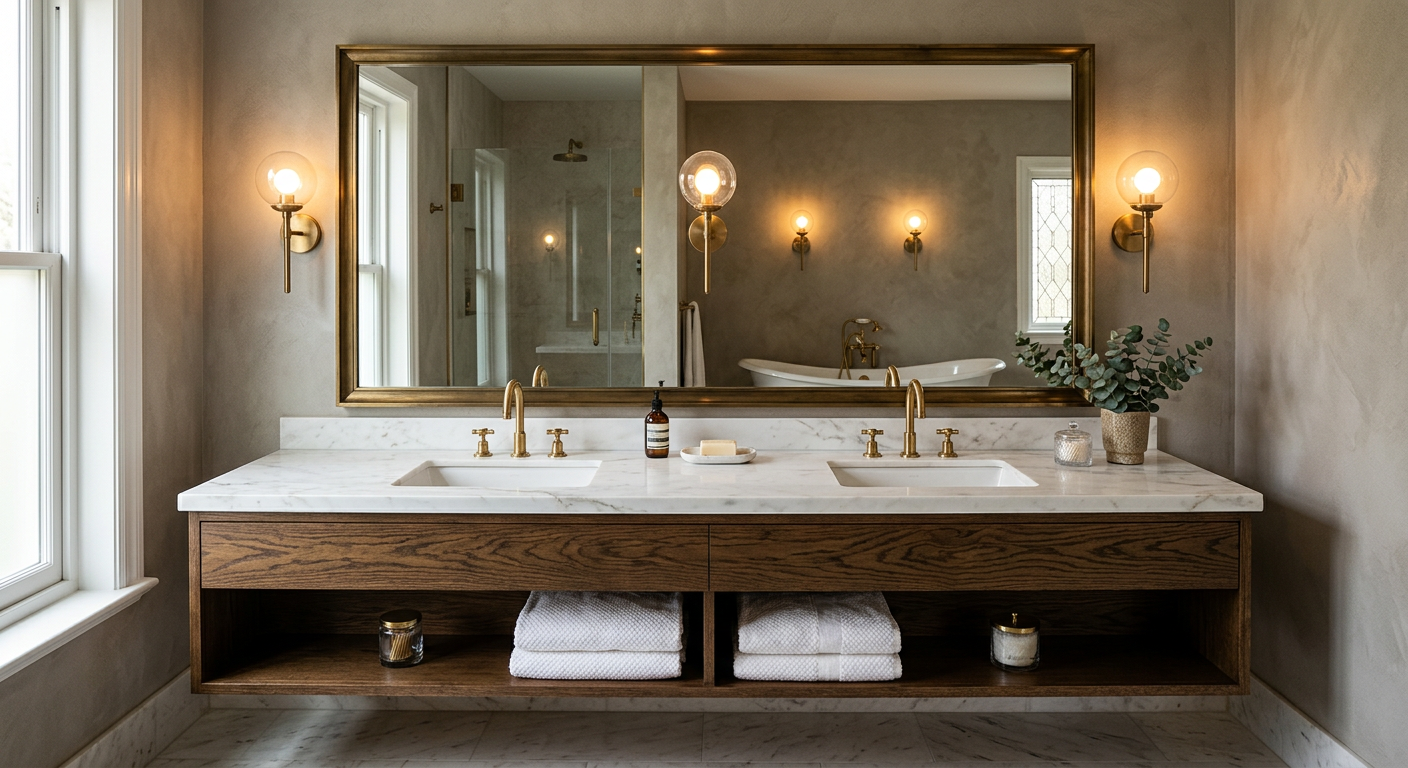
Let me walk through the modifications I recommend, what they cost, and why each one matters. I’m going to be straight with you on pricing because I think you deserve real numbers, not vague ranges.
Curbless (Zero-Threshold) Showers
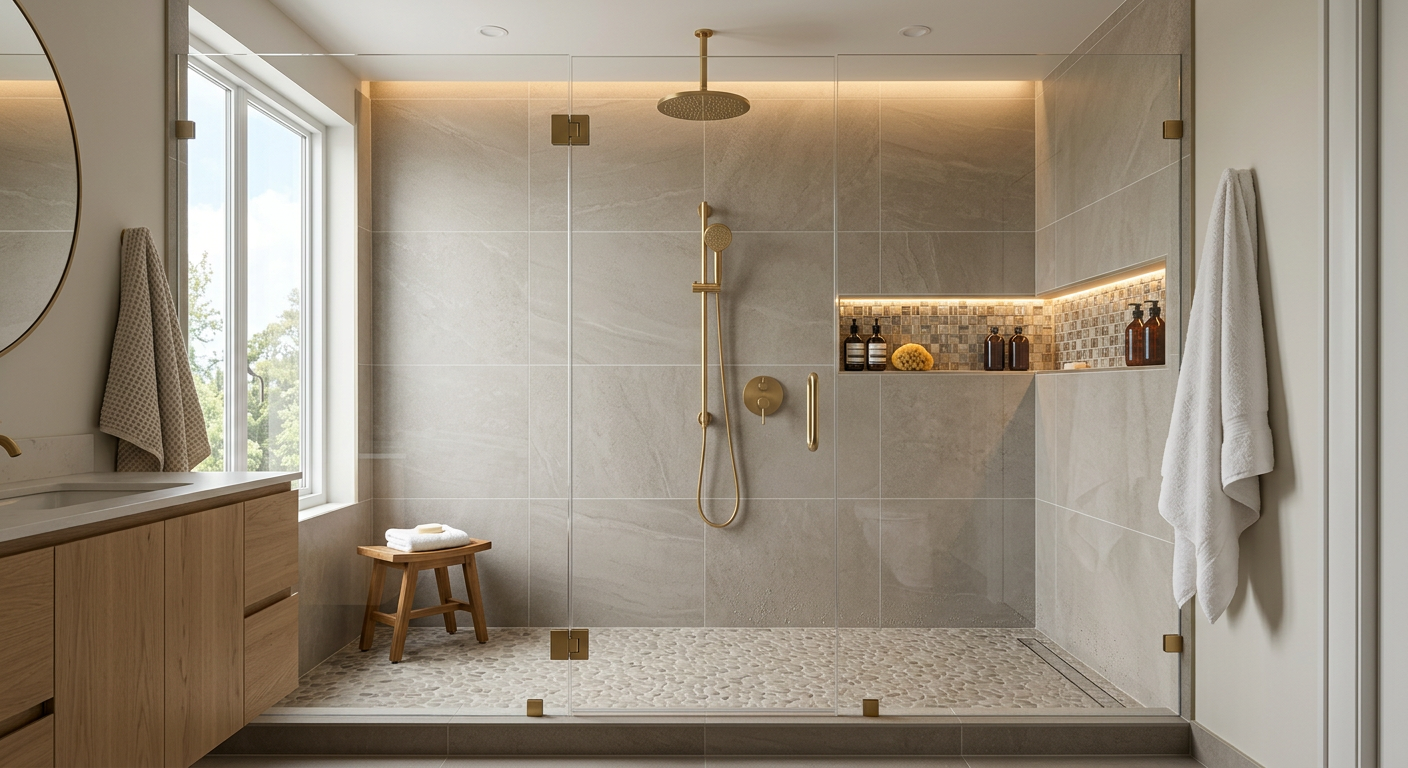
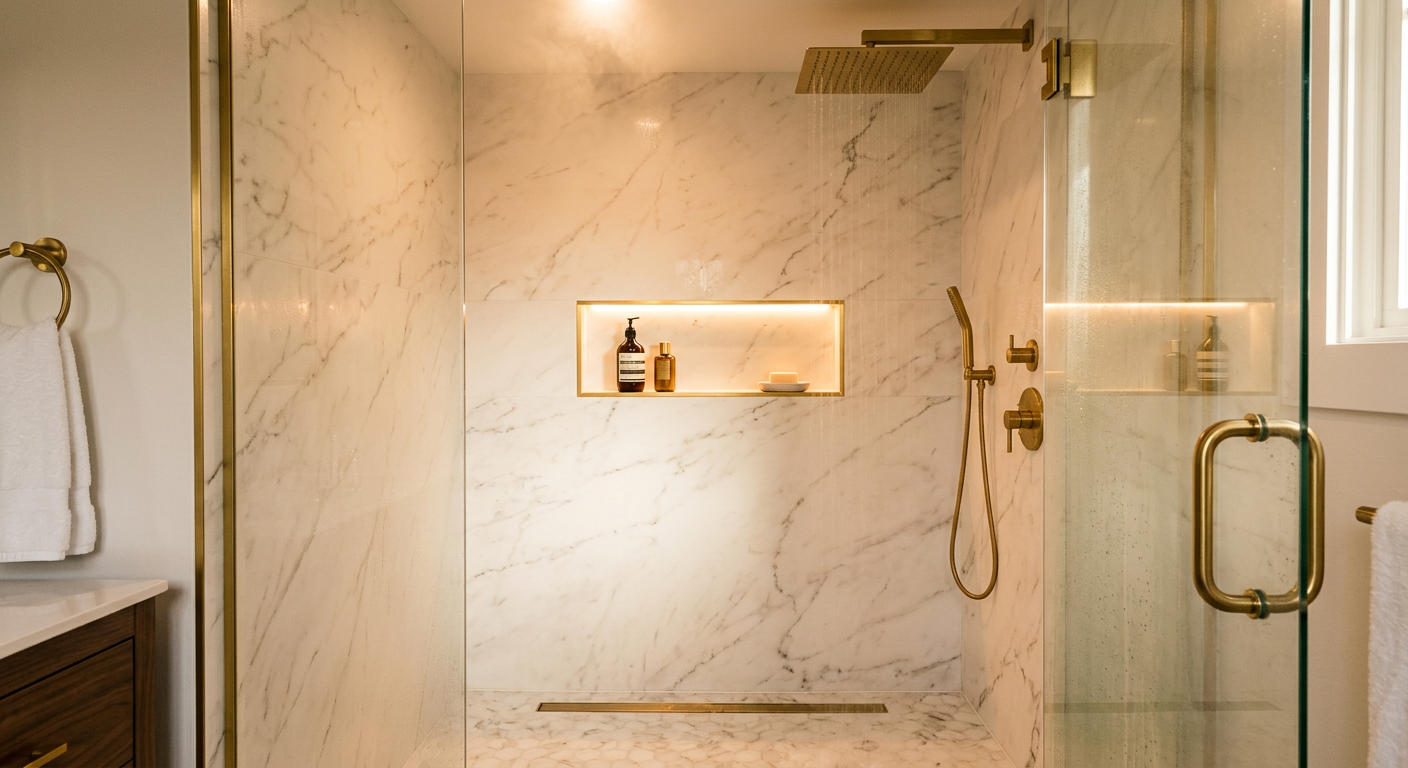
This is the single biggest upgrade for accessibility. A curbless shower eliminates the step-over that causes so many falls. You roll right in with a wheelchair or walker, or you just walk in without lifting your feet over a 4-inch lip.
A curbless shower as part of a full bathroom remodel typically runs $12,000 to $25,000 depending on the size, tile selection, and fixtures. If you’re already planning a remodel, the upcharge for going curbless versus a traditional curbed shower is relatively small. The real cost is in the floor work, since the subfloor needs to be sloped properly to a linear drain. Done right, it looks like a high-end spa.
Grab Bars and Blocking
Grab bars save lives. That’s not an exaggeration. A well-placed grab bar in the shower, next to the toilet, and near the tub gives someone something solid to hold when they need it most. ADA guidelines specify grab bars must support 250 pounds of force, and they need to be anchored into blocking behind the wall, not just screwed into drywall.
Individual grab bar installation runs $200 to $500 per bar. But here’s my biggest piece of advice: if you’re doing any bathroom remodel right now, even if you don’t need grab bars today, have your contractor install blocking behind the walls. Blocking is just solid wood backing (usually 2x6 or plywood) between the studs. It costs almost nothing during a remodel when the walls are already open. But if you skip it and need grab bars 5 years from now, someone has to tear open the wall to add blocking, then patch and repaint. That turns a $300 job into a $1,500 job.
I install blocking in every bathroom I remodel. Every single one. Even if the homeowner is 35 years old. It takes me 20 minutes and a few dollars in lumber. There’s no reason not to.
Comfort-Height Toilets
Standard toilets sit about 15 inches off the floor. A comfort-height toilet sits at 17 to 19 inches, which is the ADA-recommended range. That extra 2 to 4 inches makes a real difference for anyone with knee problems, hip replacements, or limited mobility. Standing up from a higher seat is significantly easier.
The best part? Comfort-height toilets cost the same as standard ones. There’s zero upcharge. I always recommend them for aging-in-place projects, and honestly, most of my clients under 50 prefer them too once they try one.
Wider Doorways
ADA guidelines call for a minimum 32-inch clear opening, but I recommend 34 to 36 inches for bathroom doors. A standard interior door opening is about 28 to 30 inches, which won’t accommodate a wheelchair or even a standard walker very well.
Widening a doorway costs $500 to $1,300 depending on whether we’re dealing with a load-bearing wall and the type of framing involved. Pocket doors or barn-style sliding doors are another option that eliminates the swing space a traditional door needs to open.
Non-Slip Flooring
Wet tile is dangerous. The solution isn’t ugly rubber mats. It’s choosing the right tile from the start. Small-format textured porcelain tiles (like 2x2 mosaics or 4x4 tiles with a matte finish) provide excellent grip when wet. The more grout lines, the more traction. You can get a safe floor that still looks great.
I’ve done accessible bathroom floors in porcelain that look like natural stone, wood plank, and modern concrete. Nobody walks in and thinks “this looks like a medical facility.” They just think it looks good. And it happens to be safe.
Handheld Shower Heads on Slide Bars
A handheld shower head mounted on a vertical slide bar lets you adjust the height from seated to standing position. Someone in a shower chair can bring the water down to them. Someone standing can raise it up. It costs the same as a standard fixed shower head. There’s no reason to install a fixed head anymore in my opinion.
Fold-Down Shower Bench
A wall-mounted fold-down teak bench gives you a solid place to sit in the shower when you need it, and folds flat against the wall when you don’t. They run $300 to $800 installed. I prefer teak because it handles moisture well and looks clean. A built-in tile bench is another option during a full remodel, usually at no additional cost since it’s framed and tiled with the rest of the shower.
Better Lighting
Poor lighting causes falls too. LED recessed lighting in the shower (rated for wet locations), backlit mirrors, and motion-sensor nightlights in the bathroom and hallway make a real difference. I’ve had clients tell me the nightlights alone changed their midnight routine from nerve-wracking to no big deal. A full lighting upgrade in a bathroom runs $500 to $1,200.
The “Plan Ahead” Approach
You don’t have to do everything at once. The smartest move I see homeowners make is planning for the future during a remodel they’re already doing. If you’re remodeling your bathroom at 55, you might not need grab bars or a shower bench yet. But if your contractor installs blocking behind the walls, widens the doorway, and puts in a curbless shower with a comfort-height toilet, you’ve done 80% of the work. The grab bars and bench can come later in 15 minutes each because the infrastructure is already there.
I think of it like this: build the foundation now while the walls are open. Add the accessories later when you need them.
The Cost of Remodeling vs. the Cost of Not Remodeling
Let’s talk real numbers. A full accessible bathroom remodel runs $15,000 to $35,000 depending on the scope, finishes, and size of the space. That’s a one-time investment.
The median cost of assisted living in the U.S. is $6,313 per month, or about $75,756 per year, as of 2026. One bathroom remodel that lets someone stay home safely for an extra 3 to 5 years pays for itself many times over. Even basic home modifications averaging $12,000 to $16,000 can delay or eliminate the need for a facility move.
That math isn’t even close. And it doesn’t account for the emotional value of staying in your own home, in your own neighborhood, with your own routines and memories.
My Approach: “If This Was My Mom’s House”
I apply the same standard to every aging-in-place project that I apply to everything I build. If this was my mom’s house, how would I want it done? What would I want behind those walls? Would I trust those grab bars to hold? Would I feel good about the floor surface when it’s wet?
That question keeps me honest. It’s why I install blocking even when nobody asks for it. It’s why I spec commercial-grade grab bars rated for 250+ pounds instead of decorative ones. It’s why I slope every curbless shower floor precisely so water drains completely and doesn’t pool.
Last year I did a bathroom for a couple in their 60s on South Hill. They weren’t dealing with mobility issues yet, but they wanted to be ready. We did a tub-to-shower conversion with a zero-threshold entry, a comfort-height toilet, blocking behind every wall, a handheld shower on a slide bar, and textured porcelain tile throughout. The wife told me it was the most beautiful bathroom she’d ever had. Her exact words were, “This doesn’t look accessible. It just looks expensive.” That’s the goal.
Common Questions About Aging-in-Place Bathrooms
Does an accessible bathroom hurt my home’s resale value? No. In fact, it often helps. The 65+ population is the fastest-growing demographic in the housing market, and younger buyers also appreciate features like curbless showers and wider doorways. Modern accessible design reads as “luxury,” not “medical.”
Do I need to meet full ADA requirements in my home? ADA standards technically apply to commercial and public buildings, not private residences. But I use ADA guidelines as a baseline because they’re well-researched and proven. For a private home, you have flexibility to adapt. A 32-inch door might work where ADA commercial specs call for 36 inches, depending on the situation.
Can I make my bathroom accessible without a full remodel? Yes. If you already have a walk-in shower, adding grab bars, a handheld shower head, a shower bench, non-slip mats, and better lighting can cost $1,000 to $3,000 total. That’s a solid starting point if a full remodel isn’t in the budget yet.
How long does an aging-in-place bathroom remodel take? Most projects take 2 to 4 weeks depending on the scope. A tub-to-shower conversion with accessibility features is typically on the shorter end. A full gut-and-rebuild with new plumbing, electrical, and tile takes closer to 4 weeks.
What if I only need a tub-to-shower conversion right now? That’s one of the most common calls I get, and it’s a great starting point. Removing the tub and installing a curbless shower immediately eliminates the biggest fall risk in the bathroom. Check out our tub-to-shower conversion page for details.
Ready to Plan Your Accessible Bathroom?
If you’re thinking about an aging-in-place bathroom remodel for yourself or a family member, I’d be glad to come take a look and talk through your options. Every home is different, and a 15-minute walkthrough tells me a lot about what’s possible and what it’ll cost.
Contact us to schedule a free estimate, or call me directly at (253) 392-9266. No pressure, no sales pitch. Just honest answers from someone who’s been doing this for over 20 years.