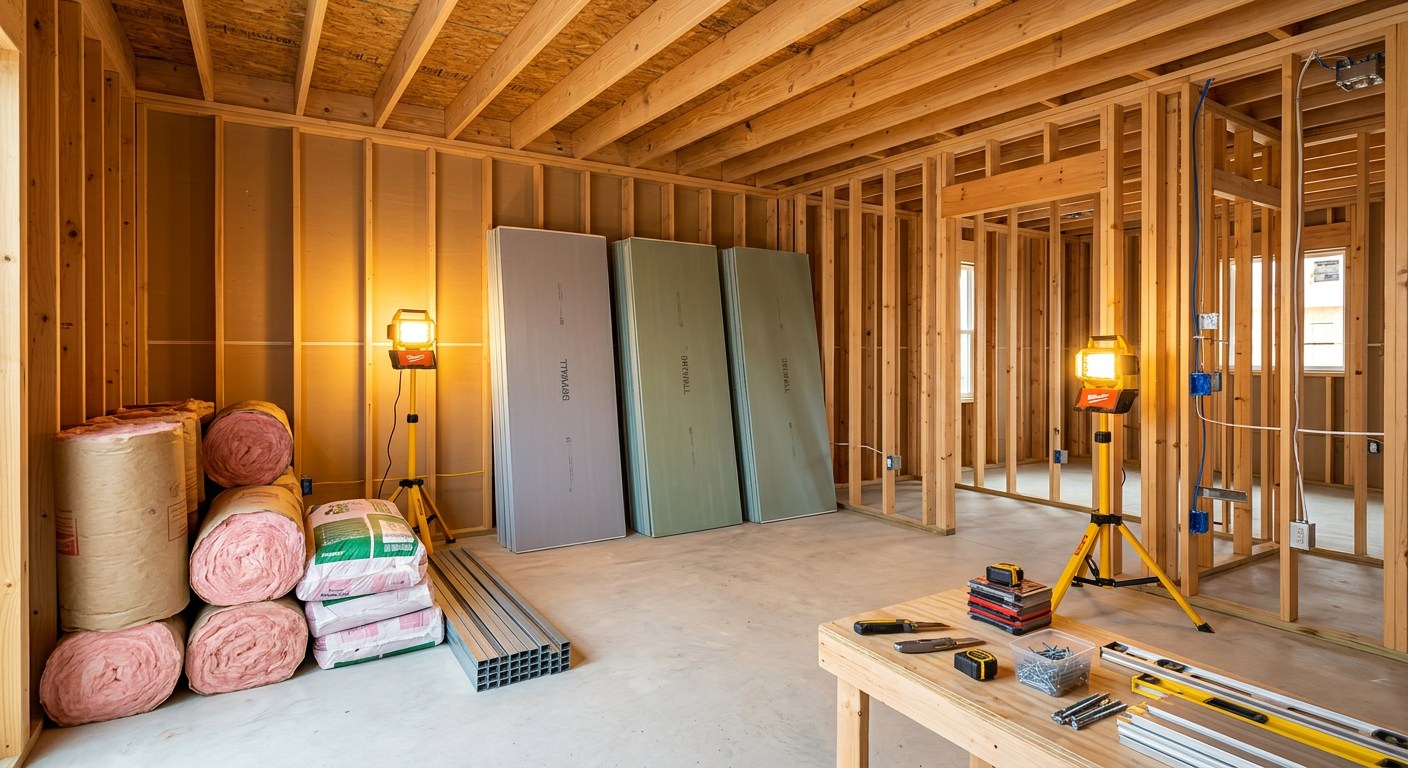
Mastering Drywall Installation: A Complete Guide for Homeowners and Builders
What Is Drywall?
Drywall, also known as sheetrock or gypsum board, is a panel made from gypsum plaster pressed between two thick sheets of paper. The material is lightweight, cost-effective, and provides a uniform surface for interior walls and ceilings. It has become the standard wall material in residential and commercial construction across the country.
Whether you’re finishing a basement, renovating a room, or building from scratch, understanding drywall installation fundamentals helps you make better decisions and achieve professional results.
Key Benefits of Drywall
- Cost-Effective: Drywall is among the most affordable wall materials available, making it accessible for projects of all sizes.
- Quick Installation: Large panels cover significant wall areas efficiently, reducing labor time compared to alternatives like plaster.
- Fire and Sound Resistant: The naturally fire-resistant gypsum core provides safety benefits, while the dense material helps reduce noise transfer between rooms.
- Smooth Finish: Creates a perfect, uniform surface for paint, wallpaper, or textured finishes.
- Easy Repairs: Damaged sections can be patched or replaced without tearing out entire walls.
The Installation Process
Step 1: Measuring and Cutting
Careful measurements are the foundation of a quality installation. Measure each wall area precisely, accounting for outlets, windows, and doors. Use a T-square and utility knife for clean, accurate cuts. Precision at this stage prevents gaps and reduces material waste.
Step 2: Hanging the Panels
Attach panels to the ceiling first, then work your way down the walls. Secure each panel to studs using drywall screws, spacing them approximately every 12 inches along the studs. Stagger seams between rows to add structural strength and reduce visible joints.
Step 3: Taping the Joints
Apply drywall tape over all seams where panels meet. This step is critical for preventing cracks from developing as the building settles over time. Both paper tape and self-adhesive mesh tape work well, each with advantages depending on the application.
Step 4: Applying Joint Compound
Spread joint compound (also called “mud”) over the taped seams in multiple coats — typically two to three applications. Allow each coat to dry completely before applying the next. Each successive coat should be wider than the last, feathering the edges to create a smooth transition.
Step 5: Sanding and Finishing
Once the final coat of joint compound is fully dry, sand the surface gently with fine-grit sandpaper. The goal is a perfectly smooth surface with no visible ridges or bumps. After sanding, apply primer to prepare the walls for their final finish.
Types of Drywall
Different projects call for different types of drywall. Choosing the right one matters:
- Regular Drywall: The standard choice for most interior walls and ceilings in dry areas.
- Moisture-Resistant (Green Board): Designed for bathrooms and kitchens where humidity levels are higher.
- Fire-Resistant (Type X): Provides enhanced fire protection for garages, utility rooms, and areas where building codes require additional fire rating.
- Soundproof Drywall: Features added layers for improved noise reduction — ideal for bedrooms, home offices, and media rooms.
- Mold-Resistant (Purple Board): Best for damp environments like basements and laundry rooms where mold growth is a concern.
Common Mistakes to Avoid
Even experienced DIYers can run into trouble with drywall. Watch out for these common pitfalls:
- Inaccurate measurements: Always measure twice before cutting. Even small errors create visible gaps.
- Overdriven screws: Driving screws too deep breaks through the paper surface, reducing holding strength.
- Poor joint taping: Rushing the taping process leads to visible seams and future cracking.
- Insufficient sanding: Skipping or rushing the sanding step leaves ridges that show through paint.
- Neglecting safety equipment: Always wear a dust mask and eye protection, especially during cutting and sanding.
Professional vs. DIY Installation
While DIY drywall installation works for small repairs and minor projects, larger undertakings benefit significantly from professional expertise. Professional installers bring precision, efficiency, and the experience needed to deliver flawless finishes. They also handle the heavy lifting — literally, as full sheets of drywall can weigh 50 to 70 pounds.
For remodeling projects that involve plumbing or electrical work behind the walls, professional installation ensures everything is properly sealed and finished to code.
Get Expert Drywall Installation
Whether you need drywall for a new construction project, a room addition, or a remodel, our team delivers clean, professional results every time. Contact Pacific Remodeling today at (253) 392-9266 to discuss your drywall installation needs and get a free estimate.
Ready to Start Your Project?
Contact Pacific Remodeling for a free, no-obligation estimate on your kitchen or bathroom remodeling project.
Get Your Free Estimate